I've dreamt in my life dreams that have stayed with me ever after, and changed my ideas: they've gone through and through me, like wine through water, and altered the color of my mind.
Emily Bronte
Wuthering Heights

Why do I keep this weblog?

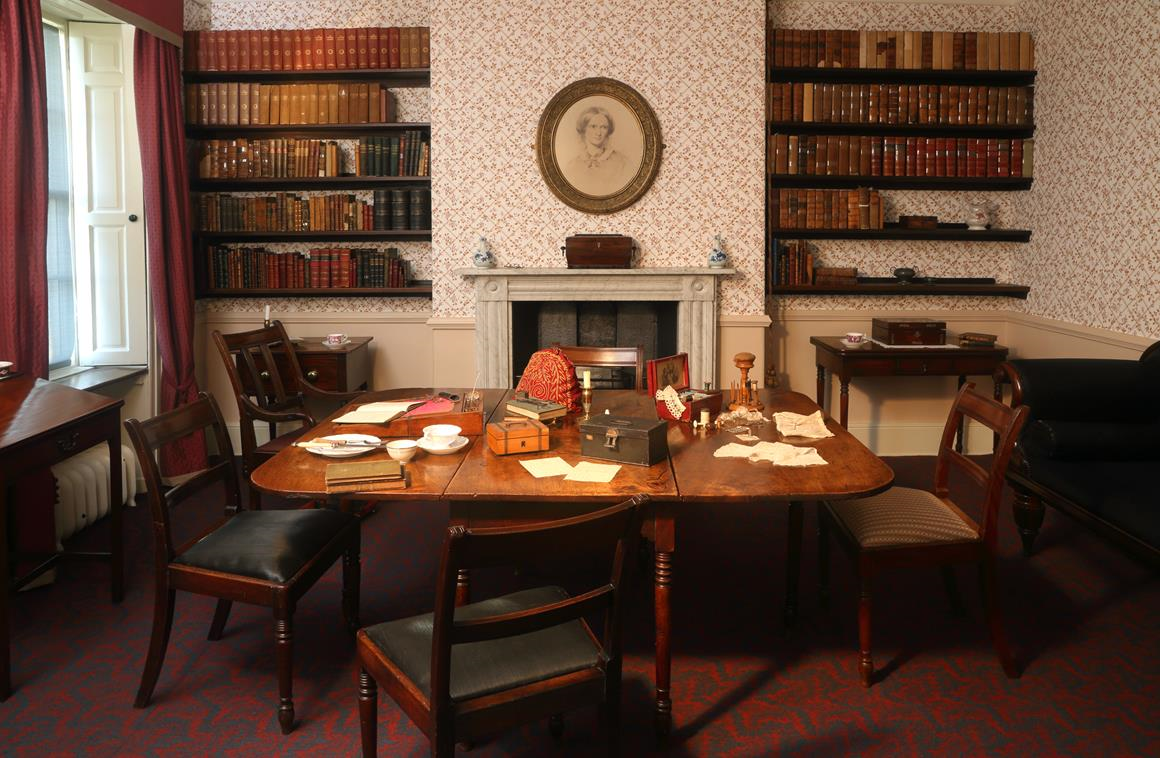
As a young girl I read Jane Eyre. I loved it. From that moment I wanted to know everything about the Bronte Sisters, their father Patrick, their brother Branwell, Tabby the housekeeper, Keeper and Flossy, two of the many pets they had. Much is known about their lives. Charlotte Bronte wrote many letters. And since just after her death was a biography written by Elizabeth Gaskell, a friend of Charlotte. They lived in Haworth in Great Britain. Their house is now the Bronte Parsonage Museum. When they were children they wrote stories in tiny books, which you can view in the museum. Branwell and Charlotte created "Angria" and Anne and Emily "Gondal". Emily wrote beautiful poetry. No coward soul is mine No trembler in the world's troubles storm-sphere: I see Heavens Glory shine, And faith shines equal, arming me from fear. On the internet, in books and movies is so much information that I was overwhelmed, but now Blogger, offers me the opportunity on this blog to create order.
.

woensdag 1 februari 2012

'I think the Brontë sisters are mad'

The Red House story (sign the petition here) continues being featured in local newspapers such as the Yorkshire Post:
This is not a 'difficult decision to make'. It's just a silly, self-damaging decision. Good for the 100 letters an emails, though - keep those coming and get as many people as possible to sign the petition.

The story has also reached a national newspaper: the Guardian.

The blog Secluded Charm is appalled by the story.

The Telegraph reports adapter Andrew Davies's thoughts on the Brontës:
'I think the Brontë sisters are mad'

maandag 30 januari 2012

Visiting Haworth in 1971


These photographes are from Georges Renaux
I met Georges through Facebook
These photographes are taken in 1971
when he and his wife were visiting Haworth
Thank you George for sharing.


This letter George received from The Bronte Society


Aspect of that wintery afternoon


"Folds of scarlet drapery shut in my view to the right hand; to the left were the clear panes of glass, protecting, but not separating me from the drear November day. At intervals, while turning over the leaves in my book, I studied the aspect of that wintery afternoon. Afar, it offered a pale blank of mist and cloud; near, a scene of wet lawn and storm-beat shrub, with ceaseless rain sweeping away wildly before a long and lamentable blast."

Chapter 1 in Jane Eyre by Charlotte Bronte.
bronteweather/failing-eyesight

Michele Howarth Rashman

Fiona Russell meets Michele Howarth Rashman, an artist who likes to work with a material she can afford.
High above St George’s Square in Hebden Bridge, at the top of a rickety wooden staircase, is the attic studio of Michele Howarth Rashman. Like the talented girls from Haworth Parsonage, Michelle spends her days engaged in meticulous, minute work (“developing long-sight and a dowager’s hump”) and she has a keen eye, which can get her into trouble (“I do use people I know and it can get a bit tricky”). And while she chooses to base herself in Yorkshire, she exhibits with the best of her London contemporaries.
Yorkshire Post

zondag 29 januari 2012

Christopher Fry's The Brontës of Haworth

BlogCritics reviews the upcoming The Brontës of Haworth DVD release:
Playwright Christopher Fry's The Brontës of Haworth, a five-episode dramatization of the lives of the 19th century literary sisters and their tortured brother televised in England in 1973 but never shown in the United States will be available in February in a two-disc DVD set from Acorn Media. Beginning with their widowed father's birthday gift to the young Branwell of the set of toy soldiers which became the inspiration for the children's early imaginative efforts as they joined together to create a fictional world modeled on the Byronic romances popular at the time, Fry traces their attempts to make their way in the world, their failures and their success, culminating in the sister's monumental achievement and early deaths. (...)
Clearly it is [Michael] Kitchen and perhaps [Alfred] Burke who are the stars of this production. Perhaps not as oddly as it would seem in a film about the Brontë family, much of the early episodes are concerned with the tragic life of Branwell rather than that of his sisters. He is after all a man haunted by demons beyond his control, the kind of fodder no dramatist can resist.  (...)
The DVD runs approximately 260 minutes. The only bonus material it contains is a short prose essay on the Brontë's home in Haworth. (Jack Goodstein)

zaterdag 28 januari 2012

Red House still looks very much as it would have in Charlotte's day. Each of the rooms brings you closer to the 1830s, from the elegant parlour to the stone-flagged kitchen with its Yorkshire range, jelly moulds and colourful crockery.


The Red House story is beginning to reach local papers. The Spenborough Guardian reports many locals are against the closure:
Red House – ‘a cultural and educational gem’ – could be lost forever under council plans to sell it off.
Kirklees says closing the award-winning Gomersal museum and moving its exhibits to other museums would save £116,000 over two years.
However the plans have caused anger with critics saying it is yet another example of north Kirklees making the biggest sacrifices.
MP Mike Wood said: “We knew Kirklees was considering reducing the opening hours, and that was bad enough, but to hear they want to close it altogether was a bombshell.
“Red House is a credit to our area, and we cannot sacrifice it in a forlorn attempt to save money at all costs. Once it’s gone, it’s gone. [...]”
Gomersal councillor Lisa Holmes, said she and her Tory ward colleagues would do their utmost to fight the plans.
“It’s an absolute shame,” she said. “I have spoken to the staff who are devastated, not just for their jobs but because they know the vital service it provides. We realise we have massive savings to make, but we will do whatever we can to find an alternative to closure. There is a big challenge ahead of us but we must protect our heritage.”
Vice-chairman of Spen Valley Civic Society Gordon North said: “People cherish Red House and I am sure they will be as disgusted as we are that the one museum in the Spen Valley could go.
“It attracts local, national and international visitors, and it’s not just because of its Brontë links. The Taylor family was incredibly important in the story of the Spen Valley – Mr Taylor was one of the first woollen manufacturers and opened the Bank of Gomersal, while his daughter Mary Taylor was at the forefront of the feminist and equality movements – and you might think that a Labour council might recognise that.”
Red House was bought by the old Spenborough Council in 1969 to be opened as a museum telling the story of the Spen Valley.
Former Spenborough councillor Michael McGowan, who went on to become an MEP, said only last year he had taken a group of visitors from New Zealand to Red House, because of Mary Taylor’s links with their country.
“It’s a fantastic resource, a cultural and educational gem, and we mustn’t lose it,” he said.
The move has also been condemned by Carol Brontë, who first visited Red House as curator of the Brontë Museum in Northern Ireland. Her husband, James Wallace Brontë, is the great-great-grandson of the Rev Patrick Brontë’s youngest brother.
“I’m absolutely devastated,” she said. “Why close this famous tourist destination? It’s a very special place and I would urge Kirklees to think again.”
Brontë Society trustee Stephen Whitehead said: “The Taylor family was so important to Charlotte that she featured them as the Yorkes in Shirley and Briarmains is an exact description of Red House. It is an irreplaceable asset and this is not the way to manage your heritage.”
President of Cleckheaton Rotary Club Bill Stevenson said they had great concerns about the length of time for objections – February 7 – and urged the public to attend Tuesday’s Spen Valley area committee meeting to air their views.
The meeting is at 7pm at the town hall, Cleckheaton.
A spokeswoman for Kirklees said difficult decisions had to be made.
“The proposal to close Red House Museum is one of a large number of measures up for consideration which have been proposed to fill a very big gap in the council’s budget and reduce expenditure,” she said.
No decision has been made yet and people are invited to make their views know by contactingcommunication@kirklees.gov.uk or Communities and Leisure, Museums and Galleries, The Stables, Ravensknowle Park, Wakefield Road, Dalton, Huddersfield, HD5 8DJ. (Margaret Heward)
The Telegraph and Argus looks at it from a Brontë point of view:
The director of the Brontë Parsonage in Haworth has condemned proposals to close a popular museum with strong connections to the famous literary family.
The future of Red House Museum, Gomersal, will be discussed at Kirklees Council’s Cabinet meeting on February 7 as part of budget talks.
But parsonage director Andrew McCarthy said: “We appreciate the challenges faced by local authorities in terms of balancing the budgets at the moment but it does seem a pretty drastic step that can be made in haste and repented at leisure.” [...]
It is said ‘Briarmains’ – the house Charlotte wrote about in her second novel, Shirley – was based on Red House and some of the characters were thought to have been inspired by the Taylor family.
Mr McCarthy said: “The Taylor family as merchants, bankers and mill-owners did a huge amount to shape that part of the West Riding and they are a great part of the heritage of the area and there is this very strong link with the Brontës, particularly Charlotte.
“She stayed there on many occasions in the 1830s as a guest of her close friends Mary and Martha Taylor.
“There are very few buildings which combine Brontë history and Brontë fiction in the way Red House does. It would be a huge loss.” (Sally Clifford)
Please keep letters/email coming to local authorities (see list in this post) and if you haven't yet, do sign this online petition. And spread the word too! 

vrijdag 27 januari 2012

Patrick Bronte baptised.....


My Great-Grandfather, Matthew Nicholson and his wife Alice. Standing behind is my

Grandmother, Emma, who was to marry Spencer Butterfield.
Matthew was baptised by Patrick Bronte, father of the Bronte sisters, in 1827 at Haworth.

donderdag 26 januari 2012

Save Red House

Save Red House

More information about the Red House.

woensdag 25 januari 2012

Red House Museum


In addition to the recently publicised reduction in the opening times of Museums and Galleries across Kirklees, the proposals now include the complete closure of Red House Museum in Gomersal.
If these proposals are passed, Red House would be closed in September and the buildings sold - not necessarily as a museum.
Red House was built in 1660 and was the home of the Taylor Family until 1920.  It has important Brontë connections and is now furnished as a home in the 1830s when Charlotte Brontë was a frequent visitor.  Red House, the Taylor family and the Spen Valley area were all featured in Charlotte Brontë's novel Shirley.  
Also on site are the recreated 1830s gardens, the restored Barn which illustrates the numerous Brontë connections in the area and the renovated Cartsheds which houses the 'Spen Valley Stories' gallery.
Last year the site received almost 30,000 visitors and was recently awarded its second Sandford Award for the quality of its heritage educational services for schools.  Read more on: Bronte Parsonage

What did the Bronte Sisters look like?

I receided this reaction:
Hi Kluerrijk- There is confusion about Charlotte's appearance. Presently, the only dependable 'bench-mark' is Branwell's 'Pillar' portrait, and to qualified extent Richmond's drawing- compromised by Charlotte's 'discomfort' in his company (no Landseer he)and his sternly bi-tonal choice of media- this 'puritan' indulgance often interpreted as suggesting Charlotte had 'hazel' eyes. Mrs Gaskill's description is sometimes believed to suggest Charlotte had 'brown' eyes, but in fact confirms she had eyes 'the same colour' as Mrs Gaskill's- blue. All other contemporary descriptions corroborate blue/grey eyes. Charlotte's off-set 'crooked mouth' is unanimously recognised, cleverly avoided by Branwell who turned her 'off-set' aspect towards the viewer. In the 'fresh' group portrait Landseer achieved the same 'illusion' by tilting her head. Rotating her image upright reveals the famed 'crooked mouth'. Two of the bona fide 'Charlotte' images above are mis-catalogued. The photo, a robust, healthy woman of several years beyond Charlotte's 39, suggests she completely recovered from the gaunt, anorexic grief described by Richmond in 1850, yet within a few months this chubby 'old' lady married, got pregnant and died of malnutrition. Not chronologically plausable, besides, it's Ellen Nussey. The 'Bonnet' pastel can't be consolidated with any known image of Charlotte- it's Mrs Elizabeth Gaskill- a formulaic 'outdoor' sketch, possibly by a London street artist- this mis-attribution now admitted by the Bronte Museum, since the pastel has been withdrawn from display- and mention. The 'fresh' group portrait magically embodies all the distinctive individual features of the 3 subjects according to the most authentic descriptions, and subtly records the 'pretty, dove-coloured tint' of bare walls (q. Ellen Nussey), the extravagant beaded curves and 'whorled' carving of the surviving William 4th sofa, and exacting renditions of rare items and unique, hand-made accessories (eg; Anne's 'herringbone' plaited hair & amythist bracelet) which remain at the parsonage Museum. Another recovered Emily is going under the hammer next month at Humberts- unreserved. BM refute the lovely thing by suggesting 'no one would want to paint her' (although probably painted by family friend J H Thompson, Emily had lot's of fellow-artist friends) she is bone and breath the same girl Branwell painted (and the same hot-seated fidgit Landseer captured in 1838). I'm sure she will be recognised by the buyer.

I have some questions by this reaction:
  • Why do you think this is a portrait of Ellen Nussey?  I cannot find any article to give this conclusion. I, myself, saw this portrait for the first time linked to this website: charlottecory.com/bronte/afriendofcharlotte)
  • Why do you think Emily had  lot's of fellow-artist friends?
  • About the colours of the eyes:  Mrs. Gaskell  to Catherine Winkworth: "" soft brown hair, not very dark; eyes (very good and expressive, looking straight and open at you) of the same colour as her hair. classiclit/egaskell/bl-egaskell-cbronte
  • Mrs. Gaskell  to Catherine Winkworth : soft brown hair not so dark as mine,  eyes (very good and expressive, looking straight and open at you) of the same colour/  Juliet Barker's The Brontes
  • You write "All other contemporary descriptions corroborate blue/grey eyes".
  • Can you give me some off these other contemperary descriptions? 
More of this subject you can read on 


maandag 23 januari 2012

Failures: Spinsters & Old Maids in Victorian England

The proper purpose of a Victorian woman’s life, of whatever class, was to marry suitably. It was not essential for the marriage to be happy, but marriage in itself was, “the crown and joy of a woman’s life – what we were born for.” A woman who did not marry became a spinster, old maid or maiden aunt, a figure of fun, pity and derision.
The Victorians became particularly exercised about redundant women after the 1851 Census showed that there were nearly 1.5 million spinsters, aged between about 20 and 40, and 350,000 old maids over 40. In the 1851 Census, there were 104 women for every 100 men in England and Wales. Victorian England was also about the British Empire. Although, as now, more men wore born than women, boys were more likely to die than girls in childhood, and men more likely than woman to die young.
Men emigrated, to the old and new commonwealth, America, Canada, New Zealand, Australia, India and other places in the British Empire. For every woman who emigrated, three men did so. Men also served time abroad either as colonial administrators or as soldiers. There was an increasing tendency for middle and upper class men to marry later. Between about 1840 and 1870, the average age at marriage for middle and upper class men was 30. At the age of 30, however, a spinster was definitely past her sell-by date.
Life for the Victorian Spinster
About the only respectable forms of employment that any middle or upper class Victorian spinster could undertake were as a teacher, a governess, or a companion. Many couples with large families liked to keep an unmarried daughter at home to tend to their every whim and care for them in their old age. Although often obliged to do so, the unmarried stay at home daughter was nevertheless incomplete. She’d failed to undertake her primary duty, to be a wife and mother. Many women who didn’t marry in Victorian England lived first in their parents’ house, and when their parents died, in the house of a brother or nephew. Although such women tended to work extremely hard, provided a useful second mother and unpaid housekeeper, they were undervalued.
Although until the Married Woman’s Property Act in 1868 a wife had no separate legal existence from her husband, and did not own property unless he chose to allow her to do so, nevertheless a married woman had a social status and respect that her single sister would always struggle to achieve.
An individual spinster or old maid could be pitied and patronised. As a group, spinsters were damaging to society, and redundant. Although it was rarely mentioned specifically, there was a general view that celibacy in women was unnatural. Of course, an old maid or a spinster was according to social norms considered to be a virgin. That was unnatural, and a waste. 
Edward Gibbon talked about single English women as, “growing thin, pale, listless and cross”.
Thackeray described Charlotte Brontë as, “a noble heart longing to mate itself and destined to wither away into old maidenhood”.
John Stewart Mill argued against the spinster stereotype and said that the problem was that women were badly educated. 
Many, such as WR Gregg, urged that single women be almost obliged to emigrate. WR Gregg went on to discuss the semi forced emigration of women that he proposed. England must restore by an emigration women that natural proportion between the sexes in the old country and in the new one, which was disturbed by an emigration of men, and the disturbance of which has wrought so much mischief in both lands.
The literary Brontë sisters often wrote about women who did not marry in their books. None of them married, and they were themselves brought up by a spinster aunt, after the early death of their mother.
Charlotte Brontë turned down four separate marriage proposals as she was determined not to live with a man she did not think her intellectual moral equal. The difficulties that respectable but impoverished women faced in Victorian England is clear from Charlotte Brontë’s second book, Shirley. 
Being a spinster did not only involve economic insecurity and precarious dependence on male relatives. But a woman was unable to bring about marriage on her own behalf. 
An old maid’s life must doubtless be void and vapid, her heart strained and empty; had I been an old maid I should have spent existence in efforts to fill the void and ease the aching I should have probably failed, and died weary and disappointed, despised and of no account, like other single women.
webhistoryofengland

zaterdag 21 januari 2012

Haworth in literary amber

The Haworth Parish Church has been able to raise the money for the reparations but it now seems that they need even more.We read on BBC News:

The Haworth housing development projects are discussed in a very good article in The Telegraph:

Railway investments

Although the public railway and the application of steam power to transport were pre-Victorian concepts, the widespread development of local, national and international railway networks was a Victorian phenomenon. The combination of great public enthusiasm, massive investment, highly skilled engineering and the application of modern technology ensured the rapid growth of railways in Britain and abroad. By 1850, 6000 miles of railway were in use, and throughout Victoria's reign British engineers were involved in railway construction and operation in many parts of the world, which in turn created new export markets for British locomotive and vehicle builders. 
Although the public railway and the application of steam power to transport were pre-Victorian concepts, the widespread development of local, national and international railway networks was a Victorian phenomenon. The combination of great public enthusiasm, massive investment, highly skilled engineering and the application of modern technology ensured the rapid growth of railways in Britain and abroad. By 1850, 6000 miles of railway were in use, and throughout Victoria's reign British engineers were involved in railway construction and operation in many parts of the world, which in turn created new export markets for British locomotive and vehicle builders.
/other-forms-of-victorian-transport-and-communication/
-------------

Charlotte proclaims in a private letter that Emily was handling financial investments for the entire family:
Emily has made herself mistress of the necessary degree of knowledge for conducting the matter, by dint of carefully reading every paragraph & every advertisement in the news-papers that related to rail-roads and as we have abstained from all gambling, all mere speculative buying-in & selling-out—we have got on very decently. claredunkle
--------------- 

"January 30th, 1846.
"MY DEAR MISS WOOLER, - I have not yet paid my visit to ----; it is, indeed, more than a year since I was there, but I frequently hear from E., and she did not fail to tell me that you were gone into Worcestershire; she was unable, however, to give me your exact address. Had I known it, I should have written to you long since. 
I thought you would wonder how we were getting on, when you heard of the railway panic, and you may be sure that I am very glad to be able to answer your kind inquiries by an assurance that our small capital is as yet undiminished. The York and Midland is, as you say, a very good line; yet, I confess to you, I should wish, for my own part, to be wise in time. I cannot think that even the very best lines will continue for many years at their present premiums; and I have been most anxious for us to sell our shares ere it be too late, and to secure the proceeds in some safer, if, for the present, less profitable investment. I cannot, however, persuade my sisters to regard the affair precisely from my point of view; and I feel as if I would rather run the risk of loss than hurt Emily's feelings by acting in direct opposition to her opinion. C.B.
------------------

The damage to the finances of the middle and upper classes was widespread. In the  words of Charlotte Bronte:
The business is certainly very bad–worse than I thought, and much worse than my  father has any idea of. In fact, the little railway property I possessed, ... scarcely any portion of it can with security be calculated on. ... However the matter may terminate, I ought perhaps to be rather thankful than dissatisfied. When I look at my own case, and compare it with that of thousands besides–I scarcely see room  for a murmur. Many–very many are–by the late strange Railway System deprived almost of their daily bread; such then as have only lost provision laid up for the future should take care how they complain.

Charlotte Bronte could afford a relatively calm view of the situation, since by the time of that letter she had achieved literary success, with her novel Jane Eyre one of the bestsellers of 1847. But most railway shareholders could not, and neither could she have had a 
few years earlier. 
dtc.umn.edu

Public transport in Victorian London


During Queen Victoria's reign, London's population grew at an astonishing rate and the central area became increasingly congested. The development of cheaper, horse-drawn public transport enabled more people to travel than ever before and this influenced the growth of the suburbs.
In the first quarter of the nineteenth century, public transport in London was expensive and offered passengers little choice. Short stage coaches ran regular services to the City from outlying villages like Camberwell, Paddington and Blackheath. Hackney carriages had a monopoly in the City, where they alone were permitted to set down or pick up passengers on demand. Travelling by short stage or hackney coach was expensive and could only be afforded by the better off, the most wealthy of whom owned their own carriages. Another key route was the river, where traffic continued as it had for centuries. Wherry boats or river taxis could be hailed from various parts of the riverbank. The vast majority of working people could not afford to use public transport at all and so were obliged to live within walking distance of their work.


An artist impression of Shillibeer's Omnibus, 1829.


Horsebuses

In 1828 George Shillibeer, a London coachbuilder, visited Paris where he was impressed by the efficiency of its new horse-drawn bus service. The following year he imported the idea to London and began operating a single horse-drawn omnibus, connecting the suburbs of Paddington and Regent's Park to the City. This service was quite revolutionary: Shillibeer's omnibus ran to a strict timetable, regardless of whether it was full; it picked up and set down passengers anywhere along the route; and fares could be paid on board, unlike the short-stage coaches, which had to be booked in advance. The omnibus was pulled by three horses and carried 22 passengers, who sat inside protected from the weather. The fares of sixpence and one shilling were less than those charged by hackney cab and short-stage coach. Even so, travelling on Shillibeer's omnibuses was not cheap, and they were used mainly by the middle classes.
Nevertheless, the service proved very popular and other operators set up in fierce competition. Soon there were 90 omnibuses on the same route, sometimes racing each other to pick up the most passengers. After many complaints the operators set up an Omnibus Association, with Shillibeer as Chairman, to regulate the busy route. The operators realized that the number of passengers was limited so the Association agreed to reduce competition by restricting the number of omnibuses to 57, running at 3 minute intervals, with inspectors to enforce the new rules. The Association was London's first coordinated attempt to provide a regular bus service.

In 1832 the monopoly of the hackney carriages was removed, allowing horse buses to operate in the City. Within two years there were 620 licensed horse buses in London and by 1851, the year of the Great Exhibition, when business was booming due to an influx of visitors to London, this total had more than doubled and the number of routes had increased to 150. Service intervals varied from 5 to 20 minutes in Inner London to an hour or longer in the outlying suburbs.

Whilst many different omnibus companies existed, in 1856 several operators were taken over by the new London General Omnibus Company (LGOC), originally a French operator. After a year spent buying out rivals the LGOC had a fleet of 600 omnibuses and was the largest bus company in the world. Other larger operators included Thomas Tilling and the London Road Car Company. Major companies began to cooperate, forming associations to regulate buses, restricting their numbers, setting timetables and sharing revenue between owners.
ltmcollection/resources/Public+transport+in+Victorian+London

Parsonage

Parsonage

Most read blogs

Family tree

The Bronte Family

Grandparents - paternal
Hugh Brunty was born 1755 and died circa 1808. He married Eleanor McClory, known as Alice in 1776.

Grandparents - maternal
Thomas Branwell (born 1746 died 5th April 1808) was married in 1768 to Anne Carne (baptised 27th April 1744 and died 19th December 1809).

Parents
Father was Patrick Bronte, the eldest of 10 children born to Hugh Brunty and Eleanor (Alice) McClory. He was born 17th March 1777 and died on 7th June 1861. Mother was Maria Branwell, who was born on 15th April 1783 and died on 15th September 1821.

Maria had a sister, Elizabeth who was known as Aunt Branwell. She was born in 1776 and died on 29th October 1842.

Patrick Bronte married Maria Branwell on 29th December 1812.

The Bronte Children
Patrick and Maria Bronte had six children.
The first child was Maria, who was born in 1814 and died on 6th June 1825.
The second daughter, Elizabeth was born on 8th February 1815 and died shortly after Maria on 15th June 1825. Charlotte was the third daughter, born on 21st April 1816.

Charlotte married Arthur Bell Nicholls (born 1818) on 29th June 1854. Charlotte died on 31st March 1855. Arthur lived until 2nd December 1906.

The first and only son born to Patrick and Maria was Patrick Branwell, who was born on 26th June 1817 and died on 24th September 1848.

Emily Jane, the fourth daughter was born on 30th July 1818 and died on 19th December 1848.

The sixth and last child was Anne, born on 17th January 1820 who died on 28th May 1849.

Charlotte Bronte

Presently the door opened, and in came a superannuated mastiff, followed by an old gentleman very like Miss Bronte, who shook hands with us, and then went to call his daughter. A long interval, during which we coaxed the old dog, and looked at a picture of Miss Bronte, by Richmond, the solitary ornament of the room, looking strangely out of place on the bare walls, and at the books on the little shelves, most of them evidently the gift of the authors since Miss Bronte's celebrity. Presently she came in, and welcomed us very kindly, and took me upstairs to take off my bonnet, and herself brought me water and towels. The uncarpeted stone stairs and floors, the old drawers propped on wood, were all scrupulously clean and neat. When we went into the parlour again, we began talking very comfortably, when the door opened and Mr. Bronte looked in; seeing his daughter there, I suppose he thought it was all right, and he retreated to his study on the opposite side of the passage; presently emerging again to bring W---- a country newspaper. This was his last appearance till we went. Miss Bronte spoke with the greatest warmth of Miss Martineau, and of the good she had gained from her. Well! we talked about various things; the character of the people, - about her solitude, etc., till she left the room to help about dinner, I suppose, for she did not return for an age. The old dog had vanished; a fat curly-haired dog honoured us with his company for some time, but finally manifested a wish to get out, so we were left alone. At last she returned, followed by the maid and dinner, which made us all more comfortable; and we had some very pleasant conversation, in the midst of which time passed quicker than we supposed, for at last W---- found that it was half-past three, and we had fourteen or fifteen miles before us. So we hurried off, having obtained from her a promise to pay us a visit in the spring... ------------------- "She cannot see well, and does little beside knitting. The way she weakened her eyesight was this: When she was sixteen or seventeen, she wanted much to draw; and she copied nimini-pimini copper-plate engravings out of annuals, ('stippling,' don't the artists call it?) every little point put in, till at the end of six months she had produced an exquisitely faithful copy of the engraving. She wanted to learn to express her ideas by drawing. After she had tried to draw stories, and not succeeded, she took the better mode of writing; but in so small a hand, that it is almost impossible to decipher what she wrote at this time.

I asked her whether she had ever taken opium, as the description given of its effects in Villette was so exactly like what I had experienced, - vivid and exaggerated presence of objects, of which the outlines were indistinct, or lost in golden mist, etc. She replied, that she had never, to her knowledge, taken a grain of it in any shape, but that she had followed the process she always adopted when she had to describe anything which had not fallen within her own experience; she had thought intently on it for many and many a night before falling to sleep, - wondering what it was like, or how it would be, - till at length, sometimes after the progress of her story had been arrested at this one point for weeks, she wakened up in the morning with all clear before her, as if she had in reality gone through the experience, and then could describe it, word for word, as it had happened. I cannot account for this psychologically; I only am sure that it was so, because she said it. ----------------------She thought much of her duty, and had loftier and clearer notions of it than most people, and held fast to them with more success. It was done, it seems to me, with much more difficulty than people have of stronger nerves, and better fortunes. All her life was but labour and pain; and she never threw down the burden for the sake of present pleasure. I don't know what use you can make of all I have said. I have written it with the strong desire to obtain appreciation for her. Yet, what does it matter? She herself appealed to the world's judgement for her use of some of the faculties she had, - not the best, - but still the only ones she could turn to strangers' benefit. They heartily, greedily enjoyed the fruits of her labours, and then found out she was much to be blamed for possessing such faculties. Why ask for a judgement on her from such a world?" elizabeth gaskell/charlotte bronte


Bronte Country

Welcome to Bronte Country, an area which straddles the West Yorkshire and East Lancashire Pennines in the North of England. A windswept land of heather and wild moors, it is hardly surprising that this region became the inspiration for the classic works of the Bronte sisters, Charlotte, Emily and Anne.
Geographically, Bronte Country consists of the Pennine hills immediately to the west of, but also including, the
Bradford / Leeds conurbation of West Yorkshire, as well as Kirklees and Calderdale. [N.B. Please click here for a geographical definition and map of the Bronte Country area.]
Unlike the pastural limestone valleys of the
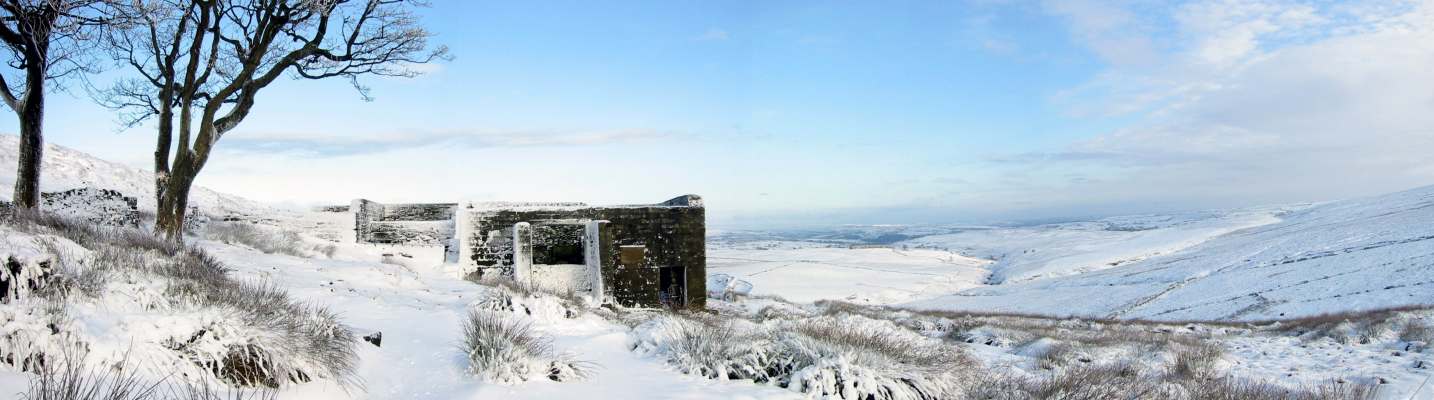
Yorkshire Dales which begin further to the north, the geology in Bronte Country is predominantly of Millstone Grit, a dark sandstone which lends the crags and scenery here an air of bleakness and desolation. Small wonder then, that this landscape fuelled the imagination of the Bronte sisters in writing their classic novels - including "Wuthering Heights" (which was reputedly inspired by the isolated moorland farmstead of Top Withens) and "Jane Eyre", etc...
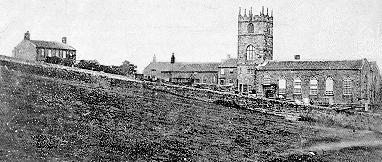
Top Withens and many of the other Bronte associated locations lie within easy reach of the village of Haworth, where the Bronte family lived at the Haworth parsonage (now the world famous Bronte Parsonage Museum), and where they wrote most of their famous works (including "Wuthering Heights" and "Jane Eyre", etc).
Other Bronte related attractions in the heart of Bronte Country include the
Bronte Birthplace in Thornton on the outskirts of Bradford (where Charlotte, Patrick Branwell, Emily and Anne were born while their father was parson at Thornton church), Ponden Hall near Haworth ("Thrushcross Grange" in "Wuthering Heights") and Oakwell Hall and Red House in Kirklees ("Fieldhead" and "Briarmains" respectively in Charlotte Bronte's "Shirley").
Slightly further afield in what is known as the
Pendle Witch Country of East Lancashire there is Wycoller (believed to be the location for Ferndean Manor in "Jane Eyre"), and Gawthorpe Hall near Burnley, where Charlotte Bronte was a regular visitor.
Outside of Bronte Country but on edge of the
Yorkshire Dales some forty or so miles to the north is the village of Cowan Bridge (near Ingleton in the Yorkshire Dales) where the local school provided the inspiration for Lowood School in "Jane Eyre", while the country house at Norton Conyers (near Ripon in the Vale of York / Vale of Mowbray) is believed to be the setting for Thornfield Hall in the same novel. [N.B. Also in the Yorkshire Dales but closer nearby is the popular beauty spot of Bolton Abbey - which was visited by the Bronte family as a special excursion in 1833.] Further afield again Anne Bronte's grave can be found at St. Mary's Church in Scarborough - a popular resort on the Yorkshire Coast and near to the North York Moors to the east.
Back in Bronte Country itself, attractions in the area which are not directly associated with the
Brontes (but which are well worth a visit in their own right) include the industrial village of Saltaire in Bradford (built by Sir Titus Salt in the mid nineteenth century, and now a UNESCO designated World Heritage Centre), the National Media Museum in Bradford, the Keighley Bus Museum in Keighley, and the Keighley and Worth Valley Railway (which runs from the village of Oxenhope through Haworth and Oakworth to the town of Keighley in the Aire Valley).
The Bronte Country area has other literary and cultural associations: For instance the poet
Ted Hughes was born in Mytholmroyd near Hebden Bridge (his wife Sylvia Plath being buried in nearby Heptonstall), while the playwright J.B. Priestley, the composer Delius, the novelist John Braine and the artist David Hockney (like the Bronte sisters themselves) were all born within the district of the city of Bradford.
The
Pennine Way long distance footpath passes through Bronte Country, as does the Bronte Way, the Bradford Millennium Footpath and the Great Northern Railway Trail.
To access a full list of
places to visit and practical information about Bronte Country, (including links to accommodation, where to eat etc) please see our main places to visit page, or take a look at our list of books and other products about the Brontes (and Bronte Country). Alternatively, please click here for more information about the Eagle

Poem: No coward soul is mine

No coward soul is mine,
No trembler in the worlds storm-troubled sphere:
I see Heavens glories shine,
And faith shines equal, arming me from fear.


O God within my breast.
Almighty, ever-present Deity!
Life -- that in me has rest,
As I -- Undying Life -- have power in Thee!


Vain are the thousand creeds
That move mens hearts: unutterably vain;
Worthless as withered weeds,
Or idlest froth amid the boundless main,


To waken doubt in one
Holding so fast by Thine infinity;
So surely anchored on
The steadfast Rock of immortality.


With wide-embracing love
Thy Spirit animates eternal years,
Pervades and broods above,
Changes, sustains, dissolves, creates, and rears.


Though earth and man were gone,
And suns and universes ceased to be,
And Thou wert left alone,
Every existence would exist in Thee.


There is not room for Death,
Nor atom that his might could render void:
Thou -- Thou art Being and Breath,
And what Thou art may never be destroyed.


--
Emily Bronte

Related Posts with Thumbnails