I've dreamt in my life dreams that have stayed with me ever after, and changed my ideas: they've gone through and through me, like wine through water, and altered the color of my mind.
Emily Bronte
Wuthering Heights

Posts tonen met het label Mary Taylor. Alle posts tonen

zondag 25 augustus 2019

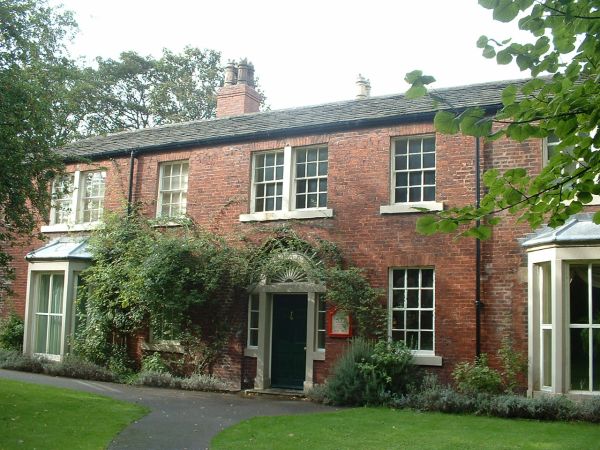
Revival For Charlotte Brontë’s Beloved Red House.


If you’ve followed the blog anne bronte from Nick Holland for a while you may remember a post from a few years ago that included a petition to stop Kirklees council closing the historic Red House in Gomersal, West Yorkshire.


Unfortunately, whilst there was huge public support for the Red House, the council decided to close it anyway, and it’s remained unused, but not unloved, ever since.
The good news is that an enthusiastic group of people are determined that the Red House should re-open. The aim is for the council to lease the building to this community group, after which it could become an important building for Brontë and history buffs and the wider community alike. Its potential really is huge, this historically important building could be a public museum again but it could also be an arts and retreat venue, a place for literary talks and festivals, a wedding venue, as well as a perfectly beautiful host for a wide variety of community groups and events.
Stage one is to convince Kirklees council to let this group address them and present their plans for a Red House revival. Once again, there’s a petition – this time set up by the brilliant Caz Goodwill, as good a friend and advocate as the Red House could hope for. Please take just a moment to click this link to the petition and sign it. It only takes a moment, but do remember to also click the email you’ll receive to confirm your signature.

Mary Taylor

There are many reasons that the Red House is important, many of which can be found in this excellent article by Dr. Stephen Caunce which featured recently in the Huddersfield Examiner. As you’d expect, in today’s blog I’m going to concentrate on just why it’s so important to Brontë lovers. The Red House in Gomersal was for many years the home of Mary Taylor, one of a great trio of friends alongside Charlotte Brontë and Ellen Nussey. They met at Roe Head school at Mirfield, just four miles from Gomersal, the school where Anne Brontë later excelled as a pupil. Charlotte grew very close to Mary Taylor, and to her younger sister Martha, and as well as Mary’s visits to Haworth Parsonage, Charlotte visited them at the Red House. So important was the house to Charlotte that she gave it a central role in her second published novel ‘Shirley’, where it can clearly be identified as Briarmains. Here in the book is Charlotte’s moving introduction to Briarmains and the Yorke family, for which we can read the Red House and the Taylors.

“But if Briar Chapel seemed alive, so also did Briarmains, though certainly the mansion appeared to enjoy a quieter phase of existence than the temple. Some of its windows too were aglow; the lower casements opened upon the lawn; curtains concealed the interior, and partly obscured the ray of the candles which lit it, but they did not entirely muffle the sound of voice and laughter. We are privileged to enter that front door, and to penetrate to the domestic sanctum.
It is not the presence of company which makes Mr. Yorke’s habitation lively, for there is none within it save his own family, and they are assembled in that farthest room to the right, the back parlour.This is the usual sitting-room of an evening. Those windows would be seen by daylight to be of brilliantly-stained glass, purple and amber the predominant hues, glittering round a gravely-tinted medallion in the centre of each, representing the suave head of William Shakespeare, and the serene one of John Milton. Some Canadian views hung on the walls—green forest and blue water scenery—and in the midst of them blazes a night-eruption of Vesuvius; very ardently it glows, contrasted with the cool foam and azure of cataracts, and the dusky depths of woods.

The fire illuminating this room, reader, is such as, if you be a southern, you do not often see burning on the hearth of a private apartment. It is a clear, hot coal fire, heaped high in the ample chimney. Mr. Yorke will have such fires even in warm summer weather. He sits beside it with a book in his hand, a little round stand at his elbow supporting a candle; but he is not reading—he is watching his children. Opposite to him sits his lady—a personage whom I might describe minutely, but I feel no vocation to the task. I see her, though, very plainly before me—a large woman of the gravest aspect, care on her front and on her shoulders, but not overwhelming, inevitable care, rather the sort of voluntary, exemplary cloud and burden people ever carry who deem it their duty to be gloomy. Ah, well-a-day! Mrs. Yorke had that notion, and grave as Saturn she was, morning, noon, and, night; and hard things she thought if any unhappy wight—especially of the female sex—who dared in her presence to show the light of a gay heart on a sunny countenance. In her estimation, to be mirthful was to be profane, to be cheerful was to be frivolous. She drew no distinctions. Yet she was a very good wife, a very careful mother, looked after her children unceasingly, was sincerely attached to her husband; only the worst of it was, if she could have had her will, she would not have permitted him to have any friend in the world beside herself. All his relations were insupportable to her, and she kept them at arm’s length.
Read all: anne bronte
Please sign the petition.

dinsdag 7 maart 2017

The milestone anniversary of Mary Taylor, a close friend of Charlotte Bronte

February marks the 200th anniversary of the birth of the renowned feminist and businesswoman Mary Taylor. Highly intelligent and ambitious, Mary Taylor is defined as a woman who broke new ground at a time when a woman's place was deemed to be very much in the home. While other women were content to keep a lovely home and look after their men folk, Mary had other ideas. Far from her wings being clipped, she yearned to travel - and did - to countries as part of her educational journey and sharing her experiences with one of her dearest friends - the famous literary sibling, Charlotte Bronte.

The pair would often meet at Mary's home - Red House. The imposing red-brick abode in Oxford Road, Gomersal, was latterly a museum, closed to the public in December - a victim of budget cuts.
While travelling they still kept in touch through written correspondence - a legacy many historians have no doubt poured over during painstaking research to find out more about these famous friends.
Born on February 26 1817, this year marks the 200th anniversary of Mary Taylor's birth. Last year a range of events were planned and celebrated the 200th anniversary of Charlotte Bronte's birth.

Read all: thetelegraphandargus

woensdag 20 november 2013

Harry Ransom Center's Brontë Family Collection


Austin Chronicle informs of the launch of the Harry Ransom Center at the University of Texas (in Austin) digital archive. One of the notable collections which can be found there is their Brontë collection:Harry Ransom Center's Brontë Family Collection

The holograph works of Charlotte and Emily Brontë make up the bulk of the Ransom Center's Brontë family collection, 1833–1858, along with works by Anne and Patrick Branwell Brontë. The collection is organized into two series: Series I. Brontë Family Works and Letters, 1833-1858 (1.5 boxes), and Series II. Works and Letters by Others, 1850 (.5 box). This collection was previously accessible through a card catalog, but has been re-cataloged as part of a retrospective conversion project.
The Brontë Family Works and Letters Series is divided into five subseries, arranged alphabetically by family member name: Subseries A. Brontë, Anne, 1836-1838; Subseries B. Brontë, Charlotte, 1833-1853; Subseries C. Brontë, Emily, 1837-1842; Subseries D. Brontë, Patrick, 1850; and Subseries E. Brontë, Patrick Branwell, 1834-1836.
Anne Brontë's writings are represented by typescripts of three poems and a list of characters she used in her stories and poems of the fictitious land of Gondal. The Charlotte Brontë subseries is more robust with holograph versions of "The Green Dwarf," "Julia," and "Something About Arthur." Also present is a letter to William Smith Williams, her publisher. Contained in the Emily Brontë subseries are two holograph poems and an essay in French.
The men of the Brontë family are represented in the final two subseries. Patrick Brontë's subseries contains a letter to an unknown recipient, and the Patrick Branwell subseries holds a holograph poem, a short story titled "A Narrative of the First War by Harry Hastings," and a commonplace book in which Patrick Branwell contributed four pages of poetry and sketches.
The Works and Letters by Others Series contains a musical score written by Ernest Powell for a poem by Emily Brontë and a biographical essay on Charlotte Brontë by Harriet Spofford. Also present are two letters, including one from Mary Taylor, one of Charlotte's life-long friends.

Title Letter to Charlotte Brontë
Creator Taylor, Mary, 1817-1893


Dear Charlotte, About a week since I received your last melancholy letter with the account of Ann's death and yr utter indifference to every thing, even to the success of your last book. Though you do not say this it is pretty plain to be seen from the style of your letter. It seems to me hard indeed that you who would succeed better than any one in making friends & keeping them should be condemned to solitude from your poverty. To no one would money bring more happiness, for no one would use it better than you would. - For me with my headlong selfindulgent habits I am perhaps better without it, but I am convinced it would give you great and noble pleasures. Look out then for success in writing. You ought to care as much for that as you do for going to Heaven. Though the advantages of being employed appear to you now the best part of the business you will soon please God have other enjoyments from your success. Railway shares will rise, your books will sell and you will acquire influence & power - & then most certainly you will find something to use it in which will interest you and make you exert yourself. What you say of Joe agrees with the melancholy account of him both in his own letters & other people's. I cannot give advice or propose a remedy. All seems to depend on himself & he - like all other people with his disease, is so powerless! His passion for marrying seems just to have come because it is the only thing serious enough to excite him - if that were done what would there be left? Your endeavour to persuade him to repose & quiet is certainly the best that could be made - may you succeed as you deserve! You will certainly do yourself good, tho it will be to both sides a melancholy meeting.
---------------------
Harry Ransom founded the Humanities Research Center in 1957 with the ambition of expanding the rare books and manuscript holdings of the University of Texas. He acquired the Edward Alexander Parsons Collection,[5] the T. Edward Hanley Collection,[6] and the Norman Bel Geddes Collection.[7][8] Ransom himself was the official director of the Center for only the years 1958 to 1961, but he directed and presided over a period of great expansion in the collections until his resignation in 1971 as Chancellor of the University of Texas System. wiki/Harry_Ransom_Center

utexas.edu/research/info/

vrijdag 12 juli 2013

The Taylors

Red House. House of the Taylors

Taylor, Joshua (known as Joshua II) (1766–1840):
Father of Mary. His family had been involved in the cloth trade for many generations. He himself was of a type new and fascinating to Charlotte when she visited the family: he was a manufacturer who could talk broad Yorkshire when it suited him, where others might be fearful of compromising their “gentry” status, but who was a traveled man, a first-rate French speaker, and one who kept abreast of artistic and intellectual trends in Britain and (especially) on the Continent. So a figure who was radical (in the early nineteenth-century sense), a republican, and a man of wide culture invaded Charlotte’s Tory, provincially limited mind, to exhilarating effect. She found the whole family much more stimulating than the Nusseys, and Joshua contributed to various families in the juvenilia, as well as eventually to Mr De Capell in “Ashworth,” York Hunsden in The Professor , and Mr Yorke in Shirley . When Charlotte knew Joshua he had been a declared bankrupt since 1826. He was determined to repay in full the losses of “my suffering creditors” ( Leeds Intelligencer , 16 Feb 1826), and they in their turn realized it was better for the cloth-manufacturing concern, with its lucrative government contracts for army uniform cloth, to continue. Initially five shillings in the pound was paid, but three years after Joshua II’s death the creditors had been paid off in full.

Taylor, Mrs Anne (1781–1856):
Mother of Mary, disliked by Charlotte and apparently by nearly everyone she came in contact with. She is depicted as Mrs Yorke in Shirley – autocratic, narrow-minded, repressing every sign of joy, originality, and vigor in those around her. After her husband’s death her children fled the Red House, except Joshua, who with his family stuck with her until 1845, when he left her in sole occupancy of the family home for the rest of her life – years in which she probably fulfilled Charlotte’s prophecy that “her unhappy disposition is preparing for her a most desolate old age” (to EN, 20 Nov 1845). The nature of her relationship with her energetic and free-thinking husband is a mystery. Charlotte speaks of her having “made her spouse give up his pre-matrimonial friends & kin” (to EN, 3 or 10 Aug 1851?), a piece of subservience on his part that seems quite out of character both with his real-life character and his depiction as Mr Yorke. In Shirley Charlotte suggested that Yorke’s “shadowy side found sympathy and affinity in . . . his wife’s uniformly overcast nature” (ch. 9). This seems an unsatisfactory explanation for the real-life situation. It seems likely that Joshua left to his wife the early upbringing of the children, hence Mary’s declaration that they never “ventured to speak at all” (MT to CB, 13 Aug 1850)

Taylor, Joshua (known as Joshua III) (1812–80):
Son of the above. He inherited leadership of the family business on his father’s death, and the Red House on his mother’s (he and his family had tried to live with his widowed mother, but the experiment had predictably failed). His wife was a Moravian, and the family was active in that church. He seems to have run the business competently, employing a large workforce, but his nature was moody, jealous, and changeable (Charlotte’s unattractive and menacing picture of him as Matthew Yorke in Shirley seems to have been generally accepted), and he is never mentioned by his sister Mary. At the end of his life he became a victim of grasping spiritualists. 

Taylor, Joseph (Joe) (?1816–57):
Brother of Mary Taylor, whom he helped and supported during her early years in New Zealand. He was the male Taylor who most fascinated Charlotte, as a human study in himself, and perhaps because she realized she had not exhausted his possibilities in the character of Martin Yorke in Shirley . He was talented, mercurial, and often generous. He was also aggressive, self-obsessed, and inconsiderate. Charlotte speaks of his “organ of combativeness and contradiction” (to EN, 1 July 1852), but could at times admire his devotion and “great kindness” to his wife and to the child to which they both showed “unbounded indulgence” (to MW, 30 Aug 1853). She spoke most admiringly of the young Joe – “worthy of being liked and admired also” (to EN, late June 1843?) – but as his puppyish self-regard and heedlessness took hold of him she lost patience with him entirely. Joe for his part managed to call at the Parsonage surprisingly often, not from any romantic interest in Charlotte, so perhaps because he valued her judgment, wanted to impress her, or eventually because she was a “celebrity” to be cultivated. She, for her part, thought well enough of him to make him a trustee of her wedding settlement. It was in the years after Brussels that Charlotte was most critical of him, particularly his heartlessness and chronic inclination to flirt with vulnerable single women.

Taylor, Mary (1817–93):

Daughter of Joshua Taylor II, a school friend of Charlotte’s at Roe Head who remained her friend for life: to her other lifelong school friend, Ellen Nussey, Charlotte wrote: “I have in fact two friends you & her staunch & true” (20 Jan 1842). Mary Taylor’s account of their schooldays together enlivens Gaskell’s Life (ch. 2), particularly the visual impression Charlotte made on her (“a little old woman, so short-sighted that she always appeared to be seeking something”) and her reaction to Charlotte’s account of the games and compulsive writing of herself and her siblings (“I told her sometimes they were like growing potatoes in a cellar”). However, her memory that Charlotte spoke with a strong Irish accent has been questioned. The friendship between Charlotte and Mary flourished after they left Roe Head, and there were frequent references to letters passing between them – letters almost all now lost, since they were not kept. When Charlotte went to teach at Roe Head the intimacy with the whole family could be resumed. Mary and Martha stayed at the Parsonage in June 1838, and Mary alone in June 1840 and December 1844. On one of these first two occasions, if Charlotte’s observation was correct, Mary began to conceive a romantic interest in Branwell, whose attitude to her changed immediately to contempt – an interesting sidelight on both characters.

Taylor Martha (1819–42):
Tthe ebullient and charming youngest daughter of the Taylors, often described by Charlotte in adjectives connoting childish qualities, though in fact she was only her junior by three years. She knew Martha at home, and then at Roe Head, and words like “chatter,” “clatter,” and “vivacity” cling to her accounts of her, as well as references to her “constant flow of good-humour” (to EN, 9 June 1838). This was during the visit Mary and Martha made to the Parsonage, a notable milestone in the relationship between the families. Even when Charlotte complains of her, there is a good-humored toleration behind the words: “you have a peculiar fashion of your own of reporting a saying or a doing and Martha has a still more peculiar fashion of re-reporting it” (to EN, 17 Mar 1840). The close relationship continued in Brussels where she and Mary were pupils at the Château de Kockleberg (more expensive than the Pensionnat Heger). Taylors, Dixons, and Brontës enjoyed frequent meetings, marred only by Emily’s noncommunication. Martha’s end came quickly – so much so that Charlotte heard of it too late to visit the deathbed. The cause of her death was almost certainly cholera – the idea that she might have died in childbirth rests more on speculation than documentation, and the haste of her burial and lack of information on the death certificate were probably a vain attempt to protect the school from ...

Taylor, Ellen (1826–51):
Cousin of the Red House Taylors, daughter of William and Margaret (née Mossman) Taylor, both of whom died in the 1830s. A maternal uncle, G. R. Mossman, cared for her for some time, and another uncle, Abraham Dixon, took an interest. Plans to send her to the Heger school in Brussels were abortive, and in 1849 she and her brother William Henry sailed for New Zealand, where their cousins Mary and Waring Taylor had been established for some years. By then she was probably already tubercular, but Mary had great joy in the early days of their companionship and partnership. They established and ran a shop, each alternating housework and shopwork week by week. Letters, sometimes joint ones, speak of their happiness together: they sketch on Sundays, hoping to send a batch home, though they “seldom succeed in making the slightest resemblance to the thing we sit down to” (MT to CB, 5 Apr 1850); they go out more, because Ellen is a more welcome guest than Mary alone was; they talk about how much profit will secure an “independence” and enable them to return home. The shop was a modest success, aided by gifts from Mary’s brothers John and Joe. But all the time there is the undercurrent of Ellen’s ill-health. “I fear hers will not be a long life” wrote Charlotte, experienced in short female lives (to EN, 6 Jan 1852). blackwellreference

taylor-mary
MaryTaylor

MARY TAYLOR,
Birth: b. 26 Feb 1817, Gomersall; d. 01 Mar 1893, High Royd Gomersall
"Quiet but self-possessed, she was an admirable businesswoman, with a way of going straight to the point that was at times disconcerting...Miss Taylor was indeed a remarkable woman - probably in her mental endowments the strongest woman who came within the Bronte circle". Cleckheaton Guardian 24 Dec 1903. maggieblanck/Taylor

woensdag 16 januari 2013

Writing slope from the Taylor family

 
Stuff (New Zealand) reports that an antiques roadshow taking place in March will include a Taylor family item.
A Marlborough family's 19th-century writing slope, with links to one of the world's literary greats, will be among items an antiques expert will view during an antiques roadshow in Blenheim.
The Curios and Collectables Roadshow, a Marlborough Girls' College fundraiser, takes place on the weekend of March 8 and 9, at the school grounds.
The writing slope, made in Liverpool, has been handed down through the family of Mary Taylor, a lifelong friend of Charlotte Bronte, whose family inspired Bronte's novel Shirley.
Miss Taylor and her brother William Waring Taylor were among Port Nicholson's earliest settlers and the family name lives on in a central Wellington street. (Sonia Beal)

zaterdag 3 maart 2012

Mary Taylor: Strong-minded Woman and Friend of Charlotte Brontë

The Red House Museum has been in the news a lot lately for all the wrong reasons. But here's one of the right reasons: the exhibition Mary Taylor: Strong-
minded Woman and Friend of Charlotte Brontë opens tomorrow March 3rd. As reported by the Yorkshire Post.

AN exhibition exploring the life of a pioneering Yorkshire woman is coming back to a West Yorkshire museum after touring to a museum in New Zealand.
Entitled Mary Taylor: Strong-minded Woman and Friend of Charlotte Brontë, it will be at Red House Museum, Gomersal, from Saturday, March 3, to March 25.
The museum was under threat of closure by Kirklees Council but will now remain open but could be subject to admission charges from June 1st.
The exhibition will coincide with International Women’s Day celebrations.
Mary Taylor, who was born into a Yorkshire woollen merchant’s family at Red House, has attracted international attention for her unusually independent lifestyle and writings.
“Leading mountain climbing expeditions to Switzerland; emigrating to New Zealand; setting up a business and teaching in Germany would represent an adventurous life even today. For a woman to do it in the 1800s was extraordinary,” says museum officer, Helga Hughes.
The exhibition was created in partnership with Joan Bellamy, a former lecturer who was born in Liversedge and is author of Mary Taylor’s biography More Precious Than Rubies.
The exhibition has shown in Wellington, New Zealand, for 18 months. bronteblog/mary-taylor-strong-minded-woman-

zondag 6 maart 2011

The magic of history and internet.


I received this reaction on my blog about the LETTERS:

This was wonderful Geri...I've taken two whole days to properly read all and have learned so much. First off, I had no idea all these letters existed from Mary, I was so surprised. Her take on Shirley was so fun to read as well as her adventures in setting up shop. The tone of her letters compared to Ellen's is much different, more real and sister like. I was glad to read that she regretted burning Charlotte's letters, that somehow satisfied me.

I know I'll be re-reading this post often, there is so much that is interesting. I didn't know about High Royd and went to it's website, so happy the home is being used and Mary's name and history are still attached to it. If I ever get to have my Bronte dream vacation, I will visit there too!

I had the same reaction. I was so surprised and touched reading it.
It came all so near.
I did only know what I was reading in the books from Juliet Parker and Rebecca West.
And suddenly Mary Taylor became so close to me. The photographs, reading about her shop, seeing Wellington in those days and suddenly these letters..... These women, Charlotte, Mary and Ellen,
their friendship, suddenly it was like it still exists. Letters, fotographs, memories, we can meet them because of internet. It is so wonderful and touching.
I will read it again and again.

I didn't know about High Royd as well, so I was searching for http://www.gomersallodge.co.uk/index.html

Gomersal Lodge Hotel, formerly named High Royd, was built for Mary Taylor on her return from New Zealand in 1860. Mary Taylor (1817 -93) of Red House was famous in no small part because of her friendship with Charlotte Bronte to whom she was an inspiration and driving force.


Grotere kaart weergeven

By seeing this I realise Mary returned to the place where she lived before, to the place of the Red House.


Grotere kaart weergeven

vrijdag 4 maart 2011

Charlotte Bronte, Mary Taylor, Ellen Nussey. Letters

Mary Taylor, the ‘M---’ of Mrs. Gaskell’s biography, and the ‘Rose Yorke’ of Shirley, will always have a peculiar interest to those who care for the Brontës. She shrank from publicity, and her name has been less mentioned than that of any other member of the circle. And yet hers was a personality singularly strenuous and strong. She wrote two books ‘with a purpose,’ and, as we shall see, vigorously embodied her teaching in her life. It will be remembered that Charlotte Brontë, Ellen Nussey, and Mary Taylor first met at Roe Head School, when Charlotte and Mary were fifteen and her friend about fourteen years of age. Here are Miss Nussey’s impressions—

‘She was pretty, and very childish-looking, dressed in a red-coloured frock with short sleeves and low neck, as then worn by young girls. Miss Wooler in later years used to say that when Mary went to her as a pupil she thought her too pretty to live. She was not talkative at school, but industrious, and always ready with lessons. She was always at the top in class lessons, with Charlotte Brontë and the writer; seldom a change was made, and then only with the three—one move. Charlotte and she were great friends for a time, but there was no withdrawing from me on either side, and Charlotte never quite knew how an estrangement arose with Mary, but it lasted a long time. Then a time came that both Charlotte and Mary were so proficient in schoolroom attainments there was no more for them to learn, and Miss Wooler set them Blair’s Belles Lettres to commit to memory. We all laughed at their studies. Charlotte persevered, but Mary took her own line, flatly refused, and accepted the penalty of disobedience, going supper-less to bed for about a month before she left school. When it was moonlight, we always found her engaged in drawing on the chest of drawers, which stood in the bay window, quite happy and cheerful. Her rebellion was never outspoken. She was always quiet in demeanour. Her sister Martha, on the contrary, spoke out vigorously, daring Miss Wooler so much, face to face, that she sometimes received a box on the ear, which hardly any saint could have withheld. Then Martha would expatiate on the danger of boxing ears, quoting a reverend brother of Miss Wooler’s. Among her school companions, Martha was called “Miss Boisterous,” but was always a favourite, so piquant and fascinating were her ways. She was not in the least pretty, but something much better, full of change and variety, rudely outspoken, lively, and original, producing laughter with her own good-humour and affection. She was her father’s pet child. He delighted in hearing her sing, telling her to go to the piano, with his affectionate “Patty lass.”

‘Mary never had the impromptu vivacity of her sister, but was lively in games that engaged her mind. Her music was very correct, but entirely cultivated by practice and perseverance. Anything underhand was detestable to both Mary and Martha; they had no mean pride towards others, but accepted the incidents of life with imperturbable good-sense and insight. They were not dressed as well as other pupils, for economy at that time was the rule of their household. The girls had to stitch all over their new gloves before wearing them, by order of their mother, to make them wear longer. Their dark blue cloth coats were worn when too short, and black beaver bonnets quite plainly trimmed, with the ease and contentment of a fashionable costume. Mr. Taylor was a banker as well as a monopolist of army cloth manufacture in the district. He lost money, and gave up banking. He set his mind on paying all creditors, and effected this during his lifetime as far as possible, willing that his sons were to do the remainder, which two of his sons carried out, as was understood, during their lifetime—Mark and Martin of Shirley.’

Mary Taylor was called ‘Pag’ by her friends, and the first important reference to her that I find is contained in a letter written by Charlotte to Ellen Nussey, when she was seventeen years of age.

TO MISS ELLEN NUSSEY
‘Haworth, June 20th, 1833.
I received a letter from Pag Taylor yesterday; she was in high dudgeon at my inattention in not promptly answering her last epistle. I however sat down immediately and wrote a very humble reply, candidly confessing my faults and soliciting forgiveness; I hope it has proved successful.
‘Charlotte Brontë.’


The next letter refers to Mr. Taylor’s death. Mr. Taylor, it is scarcely necessary to add, is the Mr. Yorke of Briarmains, who figures so largely in Shirley. I have visited the substantial red-brick house near the high-road at Gomersall, but descriptions of the Brontë country do not come within the scope of this volume.
TO MISS ELLEN NUSSEY
‘January 3rd, 1841.

‘My dear Ellen,—I received the news in your last with no surprise, and with the feeling that this removal must be a relief to Mr. Taylor himself and even to his family. The bitterness of death was past a year ago, when it was first discovered that his illness must terminate fatally; all between has been lingering suspense. This is at an end now, and the present certainty, however sad, is better than the former doubt. What will be the consequence of his death is another question; for my own part, I look forward to a dissolution and dispersion of the family, perhaps not immediately, but in the course of a year or two. It is true, causes may arise to keep them together awhile longer, but they are restless, active spirits, and will not be restrained always. Mary alone has more energy and power in her nature than any ten men you can pick out in the united parishes of Birstall and Haworth. It is vain to limit a character like hers within ordinary boundaries—she will overstep them. I am morally certain Mary will establish her own landmarks, so will the rest of them.
‘C. Brontë.’


Soon after her father’s death Mary Taylor turned her eyes towards New Zealand, where she had friends, but two years were to go by before anything came of the idea.
TO MISS EMILY J. BRONTË
‘Upperwood House, April 2nd, 1841.

Mary Taylor and Waring have come to a singular determination, but I almost think under the peculiar circumstances a defensible one, though it sounds outrageously odd at first. They are going to emigrate—to quit the country altogether. Their destination unless they change is Port Nicholson, in the northern island of New Zealand!!! Mary has made up her mind she can not and will not be a governess, a teacher, a milliner, a bonnet-maker nor housemaid. She sees no means of obtaining employment she would like in England, so she is leaving it. I counselled her to go to France likewise and stay there a year before she decided on this strange unlikely-sounding plan of going to New Zealand, but she is quite resolved. I cannot sufficiently comprehend what her views and those of her brothers may be on the subject, or what is the extent of their information regarding Port Nicholson, to say whether this is rational enterprise or absolute madness.
‘C. B.


Soon after this Mary went on a long visit to Brussels, which was the direct cause of Charlotte and Emily establishing themselves at the Pensionnat Héger. In Brussels Martha Taylor found a grave. Here is one of her letters.
TO MISS ELLEN NUSSEY.
‘Brussels, Sept. 9th, 1841.

‘My dear Ellen,—I received your letter from Mary, and you say I am to write though I have nothing to say. My sister will tell you all about me, for she has more time to write than I have.
‘Whilst Mary and John have been with me, we have been to Liege and Spa, where we stayed eight days. I found my little knowledge of French very useful in our travels. I am going to begin working again very hard, now that John and Mary are going away. I intend beginning German directly. I would write some more but this pen of Mary’s won’t write; you must scold her for it, and tell her to write you a long account of my proceedings. You must write to me sometimes. George Dixon is coming here the last week in September, and you must send a letter for me to Mary to be forwarded by him. Good-bye. May you be happy.

It was while Charlotte was making her second stay in Brussels that she heard of Mary’s determination to go with her brother Waring to New Zealand, with a view to earning her own living in any reasonable manner that might offer.
TO MISS ELLEN NUSSEY
‘Brussels, April 1st, 1843.

‘ You will have heard of Mary Taylor’s resolute and intrepid proceedings. Her public letters will have put you in possession of all details—nothing is left for me to say except perhaps to express my opinion upon it. I have turned the matter over on all sides and really I cannot consider it otherwise than as very rational. Mind, I did not jump to this opinion at once, but was several days before I formed it conclusively.
C. B.’
------------------------
 TO MISS ELLEN NUSSEY
‘Sunday Evening, June 1st, 1845.

‘Dear Ellen,—You probably know that another letter has been received from Mary Taylor. It is, however, possible that your absence from home will have prevented your seeing it, so I will give you a sketch of its contents. It was written at about 4° N. of the Equator. The first part of the letter contained an account of their landing at Santiago. Her health at that time was very good, and her spirits seemed excellent. They had had contrary winds at first setting out, but their voyage was then prosperous. In the latter portion of the letter she complains of the excessive heat, and says she lives chiefly on oranges; but still she was well, and freer from headache and other ailments than any other person on board.
‘C. Brontë.’
------------------------

TO MISS ELLEN NUSSEY
‘Manchester, September 13th, 1846.

‘By this time you will have got Mary’s letters; most interesting they are, and she is in her element because she is where she has a toilsome task to perform, an important improvement to effect, a weak vessel to strengthen.
‘C. B.’
------------------------

TO MISS ELLEN NUSSEY
‘June 5th, 1847.
‘Dear Ellen,—I return you Mary Taylor’s letter; it made me somewhat sad to read it, for I fear she is not quite content with her existence in New Zealand. She finds it too barren. I believe she is more home-sick than she will confess. Her gloomy ideas respecting you and me prove a state of mind far from gay.
‘C. BRONTË.’
------------------------
TO MISS CHARLOTTE BRONTË
‘Wellington, April 10th, 1849.
‘Dear Charlotte,—I’ve been delighted to receive a very interesting letter from you with an account of your visit to London, etc. I believe I have tacked this acknowledgment to the tail of my last letter to you, but since then it has dawned on my comprehension that you are becoming a very important personage in this little world, and therefore, d’ye see? I must write again to you. I wish you would give me some account of Newby, and what the man said when confronted with the real Ellis Bell. By the way, having got your secret, will he keep it? And how do you contrive to get your letters under the address of Mr. Bell? The whole scheme must be particularly interesting to hear about, if I could only talk to you for half a day. When do you intend to tell the good people about you?

‘I am now hard at work expecting Ellen Taylor. She may possibly be here in two months. I once thought of writing you some of the dozens of schemes I have for Ellen Taylor, but as the choice depends on her I may as well wait and tell you the one she chooses. The two most reasonable are keeping a school and keeping a shop. The last is evidently the most healthy, but the most difficult of accomplishment. I have written an account of the earthquakes for Chambers, and intend (now don’t remind me of this a year hence, because la femme propose) to write some more. What else I shall do I don’t know. I find the writing faculty does not in the least depend on the leisure I have, but much more on the active work I have to do. I write at my novel a little and think of my other book. What this will turn out, God only knows. It is not, and never can be forgotten. It is my child, my baby, and I assure you such a wonder as never was. I intend him when full grown to revolutionise society and faire époque in history.
‘In the meantime I’m doing a collar in crochet work.

‘Pag.’
------------------------
TO MISS CHARLOTTE BRONTË
‘Wellington, New Zealand,
‘July 24th, 1849.

‘Dear Charlotte,—About a month since I received and read Jane Eyre. It seemed to me incredible that you had actually written a book. Such events did not happen while I was in England. I begin to believe in your existence much as I do in Mr. Rochester’s. In a believing mood I don’t doubt either of them. After I had read it I went on to the top of Mount Victoria and looked for a ship to carry a letter to you. There was a little thing with one mast, and also H.M.S. Fly, and nothing else. If a cattle vessel came from Sydney she would probably return in a few days, and would take a mail, but we have had east wind for a month and nothing can come in.

‘Aug. 1.—The Harlequin has just come from Otago, and is to sail for Singapore when the wind changes, and by that route (which I hope to take myself sometime) I send you this. Much good may it do you. Your novel surprised me by being so perfect as a work of art. I expected something more changeable and unfinished. You have polished to some purpose. If I were to do so I should get tired, and weary every one else in about two pages. No sign of this weariness in your book—you must have had abundance, having kept it all to yourself!

‘You are very different from me in having no doctrine to preach. It is impossible to squeeze a moral out of your production. Has the world gone so well with you that you have no protest to make against its absurdities? Did you never sneer or declaim in your first sketches? I will scold you well when I see you. I do not believe in Mr. Rivers. There are no good men of the Brocklehurst species. A missionary either goes into his office for a piece of bread, or he goes from enthusiasm, and that is both too good and too bad a quality for St. John. It’s a bit of your absurd charity to believe in such a man. You have done wisely in choosing to imagine a high class of readers. You never stop to explain or defend anything, and never seem bothered with the idea. If Mrs. Fairfax or any other well-intentioned fool gets hold of this what will she think? And yet, you know, the world is made up of such, and worse. Once more, how have you written through three volumes without declaring war to the knife against a few dozen absurd doctrines, each of which is supported by “a large and respectable class of readers”? Emily seems to have had such a class in her eye when she wrote that strange thing Wuthering Heights. Anne, too, stops repeatedly to preach commonplace truths. She has had a still lower class in her mind’s eye. Emily seems to have followed the bookseller’s advice. As to the price you got, it was certainly Jewish. But what could the people do? If they had asked you to fix it, do you know yourself how many ciphers your sum would have had? And how should they know better? And if they did, that’s the knowledge they get their living by. If I were in your place, the idea of being bound in the sale of two more would prevent me from ever writing again. Yet you are probably now busy with another. It is curious for me to see among the old letters one from Anne sending a copy of a whole article on the currency question written by Fonblanque! I exceedingly regret having burnt your letters in a fit of caution, and I’ve forgotten all the names. Was the reader Albert Smith? What do they all think of you?

‘I mention the book to no one and hear no opinions. I lend it a good deal because it’s a novel, and it’s as good as another! They say “it makes them cry.” They are not literary enough to give an opinion. If ever I hear one I’ll embalm it for you. As to my own affair, I have written 100 pages, and lately 50 more. It’s no use writing faster. I get so disgusted, I can do nothing.

‘If I could command sufficient money for a twelve-month, I would go home by way of India and write my travels, which p. 247would prepare the way for my novel. With the benefit of your experience I should perhaps make a better bargain than you. I am most afraid of my health. Not that I should die, but perhaps sink into a state of betweenity, neither well nor ill, in which I should observe nothing, and be very miserable besides. My life here is not disagreeable. I have a great resource in the piano, and a little employment in teaching.

‘It’s a pity you don’t live in this world, that I might entertain you about the price of meat. Do you know, I bought six heifers the other day for £23, and now it is turned so cold I expect to hear one-half of them are dead. One man bought twenty sheep for £8, and they are all dead but one. Another bought 150 and has 40 left.

‘I have now told you everything I can think of except that the cat’s on the table and that I’m going to borrow a new book to read—no less than an account of all the systems of philosophy of modern Europe. I have lately met with a wonder, a man who thinks Jane Eyre would have done better to marry Mr. Rivers! He gives no reason—such people never do.

‘Mary Taylor.’
--------------------------
TO MISS CHARLOTTE BRONTË
‘Wellington, New Zealand.

‘Dear Charlotte,—I have set up shop! I am delighted with it as a whole—that is, it is as pleasant or as little disagreeable as you can expect an employment to be that you earn your living by. The best of it is that your labour has some return, and you are not forced to work on hopelessly without result. Du reste, it is very odd. I keep looking at myself with one eye while I’m using the other, and I sometimes find myself in very queer positions. Yesterday I went along the shore past the wharfes and several warehouses on a street where I had never been before during all the five years I have been in Wellington. I opened the door of a long place filled with packages, with passages up the middle, and a row of high windows on one side. At the far end of the room a man was writing at a desk beneath a window. I walked all the length of the room very slowly, for what I had come for had completely gone out of my head. Fortunately the man never heard me until I had recollected it. Then he got up, and I asked him for some stone-blue, saltpetre, tea, pickles, salt, etc. He was very civil. I bought some things and asked for a note of them. He went to his desk again; I looked at some newspapers lying near. On the top was a circular from Smith & Elder containing notices of the most important new works. The first and longest was given to Shirley, a book I had seen mentioned in the Manchester Examiner as written by Currer Bell. I blushed all over. The man got up, folding the note. I pulled it out of his hand and set off to the door, looking odder than ever, for a partner had come in and was watching. The clerk said something about sending them, and I said something too—I hope it was not very silly—and took my departure.

‘I have seen some extracts from Shirley in which you talk of women working. And this first duty, this great necessity, you seem to think that some women may indulge in, if they give up marriage, and don’t make themselves too disagreeable to the other sex. You are a coward and a traitor. A woman who works is by that alone better than one who does not; and a woman who does not happen to be rich and who still earns no money and does not wish to do so, is guilty of a great fault, almost a crime—a dereliction of duty which leads rapidly and almost certainly to all manner of degradation. It is very wrong of you to plead for toleration for workers on the ground of their being in peculiar circumstances, and few in number or singular in disposition. Work or degradation is the lot of all except the very small number born to wealth.
‘Ellen is with me, or I with her. I cannot tell how our shop will turn out, but I am as sanguine as ever. Meantime we certainly amuse ourselves better than if we had nothing to do. We like it, and that’s the truth. By the Cornelia we are going to send our sketches and fern leaves. You must look at them, and it will need all your eyes to understand them, for they are a mass of confusion. They are all within two miles of Wellington, and some of them rather like—Ellen’s sketch of p. 249me especially. During the last six months I have seen more “society” than in all the last four years. Ellen is half the reason of my being invited, and my improved circumstances besides. There is no one worth mentioning particularly. The women are all ignorant and narrow, and the men selfish. They are of a decent, honest kind, and some intelligent and able. A Mr. Woodward is the only literary man we know, and he seems to have fair sense. This was the clerk I bought the stone-blue of. We have just got a mechanic’s institute, and weekly lectures delivered there. It is amusing to see people trying to find out whether or not it is fashionable and proper to patronise it. Somehow it seems it is. I think I have told you all this before, which shows I have got to the end of my news. Your next letter to me ought to bring me good news, more cheerful than the last. You will somehow get drawn out of your hole and find interests among your fellow-creatures. Do you know that living among people with whom you have not the slightest interest in common is just like living alone, or worse? Ellen Nussey is the only one you can talk to, that I know of at least. Give my love to her and to Miss Wooler, if you have the opportunity. I am writing this on just such a night as you will likely read it—rain and storm, coming winter, and a glowing fire. Ours is on the ground, wood, no fender or irons; no matter, we are very comfortable.

‘Pag.’
---------------------------
TO MISS CHARLOTTE BRONTË
‘Wellington, N. Z., April 3rd, 1850.
‘Dear Charlotte,—About a week since I received your last melancholy letter with the account of Anne’s death and your utter indifference to everything, even to the success of your last book. Though you do not say this, it is pretty plain to be seen from the style of your letter. It seems to me hard indeed that you who would succeed, better than any one, in making friends and keeping them, should be condemned to solitude from your poverty. To no one would money bring more happiness, for no one would use it better than you would. For me, p. 250with my headlong self-indulgent habits, I am perhaps better without it, but I am convinced it would give you great and noble pleasures. Look out then for success in writing; you ought to care as much for that as you do for going to Heaven. Though the advantages of being employed appear to you now the best part of the business, you will soon, please God, have other enjoyments from your success. Railway shares will rise, your books will sell, and you will acquire influence and power; and then most certainly you will find something to use it in which will interest you and make you exert yourself.

‘I have got into a heap of social trickery since Ellen came, never having troubled my head before about the comparative numbers of young ladies and young gentlemen. To Ellen it is quite new to be of such importance by the mere fact of her femininity. She thought she was coming wofully down in the world when she came out, and finds herself better received than ever she was in her life before. And the class are not in education inferior, though they are in money. They are decent well-to-do people: six grocers, one draper, two parsons, two clerks, two lawyers, and three or four nondescripts. All these but one have families to “take tea with,” and there are a lot more single men to flirt with. For the last three months we have been out every Sunday sketching. We seldom succeed in making the slightest resemblance to the thing we sit down to, but it is wonderfully interesting. Next year we hope to send a lot home. With all this my novel stands still; it might have done so if I had had nothing to do, for it is not want of time but want of freedom of mind that makes me unable to direct my attention to it. Meantime it grows in my head, for I never give up the idea. I have written about a volume I suppose. Read this letter to Ellen Nussey.

‘Mary Taylor.’
---------------------------
TO MISS CHARLOTTE BRONTË
‘Wellington, August 13th, 1850.
‘Dear Charlotte,—After waiting about six months we have just got Shirley. It was landed from the Constantinople on Monday afternoon, just in the thick of our preparations for a “small party” for the next day. We stopped spreading red blankets over everything (New Zealand way of arranging the room) and opened the box and read all the letters. Soyer’s Housewife and Shirley were there all right, but Miss Martineau’s book was not. In its place was a silly child’s tale called Edward Orland. On Tuesday we stayed up dancing till three or four o’clock, what for I can’t imagine. However, it was a piece of business done. On Wednesday I began Shirley and continued in a curious confusion of mind till now, principally at the handsome foreigner who was nursed in our house when I was a little girl. By the way, you’ve put him in the servant’s bedroom. You make us all talk much as I think we should have done if we’d ventured to speak at all. What a little lump of perfection you’ve made me! There is a strange feeling in reading it of hearing us all talking. I have not seen the matted hall and painted parlour windows so plain these five years. But my father is not like. He hates well enough and perhaps loves too, but he is not honest enough. It was from my father I learnt not to marry for money nor to tolerate any one who did, and he never would advise any one to do so, or fail to speak with contempt of those who did. Shirley is much more interesting than Jane Eyre, who never interests you at all until she has something to suffer. All through this last novel there is so much more life and stir that it leaves you far more to remember than the other. Did you go to London about this too? What for? I see by a letter of yours to Mr. Dixon that you have been. I wanted to contradict some of your opinions, now I can’t. As to when I’m coming home, you may well ask. I have wished for fifteen years to begin to earn my own living; last April I began to try—it is too soon to say yet with what success. I am woefully ignorant, terribly wanting in tact, and obstinately lazy, and almost too old to mend. Luckily there is no other dance for me, so I must work. Ellen takes to it kindly, it gratifies a deep ardent wish of hers as of mine, and she is habitually industrious. For her, ten years younger, our shop will be a blessing. She may possibly secure an independence, and skill to keep it and use it, before the prime of life   is past. As to my writings, you may as well ask the Fates about that too. I can give you no information. I write a page now and then. I never forget or get strange to what I have written. When I read it over it looks very interesting.
‘Mary Taylor.’
--------------------------
TO MISS CHARLOTTE BRONTË
‘Wellington, N. Z.

‘My dear Miss Brontë,—I shall tell you everything I can think of, since you said in one of your letters to Pag that you wished me to write to you. I have been here a year. It seems a much shorter time, and yet I have thought more and done more than I ever did in my life before. When we arrived, Henry and I were in such a hurry to leave the ship that we didn’t wait to be fetched, but got into the first boat that came alongside. When we landed we inquired where Waring lived, but hadn’t walked far before we met him. I had never seen him before, but he guessed we were the cousins he expected, so caught us and took us along with him. Mary soon joined us, and we went home together. At first I thought Mary was not the least altered, but when I had seen her for about a week I thought she looked rather older. The first night Mary and I sat up till 2 a.m. talking. Mary and I settled we would do something together, and we talked for a fortnight before we decided whether we would have a school or shop; it ended in favour of the shop. Waring thought we had better be quiet, and I believe he still thinks we are doing it for amusement; but he never refuses to help us. He is teaching us book-keeping, and he buys things for us now and then. Mary gets as fierce as a dragon and goes to all the wholesale stores and looks at things, gets patterns, samples, etc., and asks prices, and then comes home, and we talk it over; and then she goes again and buys what we want. She says the people are always civil to her. Our keeping shop astonishes every body here; I believe they think we do it for fun. Some think we shall make nothing of it, or that we shall get tired; and all laugh at us. Before I left home I used to be afraid of being laughed at, but now it has very little effect upon me.

‘Mary and I are settled together now: I can’t do without Mary and she couldn’t get on by herself. I built the house we live in, and we made the plan ourselves, so it suits us. We take it in turns to serve in the shop, and keep the accounts, and do the housework—I mean, Mary takes the shop for a week and I the kitchen, and then we change. I think we shall do very well if no more severe earthquakes come, and if we can prevent fire. When a wooden house takes fire it doesn’t stop; and we have got an oil cask about as high as I am, that would help it. If some sparks go out at the chimney-top the shingles are in danger. The last earthquake but one about a fortnight ago threw down two medicine bottles that were standing on the table and made other things jingle, but did no damage. If we have nothing worse than that I don’t care, but I don’t want the chimney to come down—it would cost £10 to build it up again. Mary is making me stop because it is nearly 9 p.m. and we are going to Waring’s to supper. Good-bye.—Yours truly,
‘Ellen Taylor.’
--------------------------
TO MISS ELLEN NUSSEY
‘Haworth, July 4th, 1849.

‘I had a long letter from Mary Taylor—interesting but sad, because it contained many allusions to those who are in this world no more. She mentioned you, and seemed impressed with an idea of the lamentable nature of your unoccupied life. She spoke of her own health as being excellent.
‘C. B.’

---------------------------
TO MISS ELLEN NUSSEY
‘Haworth, May 18th.

‘Dear Ellen,—I inclose Mary Taylor’s letter announcing Ellen’s death, and two last letters—sorrowful documents, all of them. I received them this morning from Hunsworth without any note or directions where to send them, but I think, if I mistake not, Amelia in a previous note told me to transmit them to you.—Yours faithfully,
‘C. B.’
---------------------------
TO MISS CHARLOTTE BRONTË
‘Wellington, N. Z.

‘Dear Charlotte,—I began a letter to you one bitter cold evening last week, but it turned out such a sad one that I have left it and begun again. I am sitting all alone in my own house, or rather what is to be mine when I’ve paid for it. I bought it of Henry when Ellen died—shop and all, and carry on by myself. I have made up my mind not to get any assistance. I have not too much work, and the annoyance of having an unsuitable companion was too great to put up with without necessity. I find now that it was Ellen that made me so busy, and without her to nurse I have plenty of time. I have begun to keep the house very tidy; it makes it less desolate. I take great interest in my trade—as much as I could do in anything that was not all pleasure. But the best part of my life is the excitement of arrivals from England. Reading all the news, written and printed, is like living another life quite separate from this one. The old letters are strange—very, when begin to read them, but quite familiar notwithstanding. So are all the books and newspapers, though I never see a human being to whom it would ever occur to me to mention anything I read in them. I see your nom de guerre in them sometimes. I saw a criticism on the preface to the second edition of Wuthering Heights. I saw it among the notables who attended Thackeray’s lectures. I have seen it somehow connected with Sir J. K. Shuttleworth. Did he want to marry you, or only to lionise you? or was it somebody else?
‘Your life in London is a “new country” to me, which I cannot even picture to myself. You seem to like it—at least some things in it, and yet your late letters to Mrs. J. Taylor talk of low spirits and illness. “What’s the matter with you now?” as my mother used to say, as if it were the twentieth time in a fortnight. It is really melancholy that now, in the prime of life, in the flush of your hard-earned prosperity, you can’t be well. Did not Miss Martineau improve you? If she did, why not try her and her plan again? But I suppose if you had hope and energy to try, you would be well. Well, it’s nearly dark and you will surely be well when you read this, so what’s the use of writing? I should like well to have some details of your life, but how can I hope for it? I have often tried to give you a picture of mine, but I have not the skill. I get a heap of details, mostly paltry in themselves, and not enough to give you an idea of the whole. Oh, for one hour’s talk! You are getting too far off and beginning to look strange to me. Do you look as you used to do, I wonder? What do you and Ellen Nussey talk about when you meet? There! it’s dark.

‘Sunday night.—I have let the vessel go that was to take this. As there were others going soon I did not much care. I am in the height of cogitation whether to send for some worsted stockings, etc. They will come next year at this time, and who can tell what I shall want then, or shall be doing? Yet hitherto we have sent such orders, and have guessed or known pretty well what we should want. I have just been looking over a list of four pages long in Ellen’s handwriting. These things ought to come by the next vessel, or part of them at least. When tired of that I began to read some pages of “my book” intending to write some more, but went on reading for pleasure. I often do this, and find it very interesting indeed. It does not get on fast, though I have written about one volume and a half. It’s full of music, poverty, disputing, politics, and original views of life. I can’t for the life of me bring the lover into it, nor tell what he’s to do when he comes. Of the men generally I can never tell what they’ll do next. The women I understand pretty well, and rare tracasserie there is among them—they are perfectly feminine in that respect at least.
‘I am just now in a state of famine. No books and no news from England for this two months. I am thinking of visiting a circulating library from sheer dulness. If I had more time I should get melancholy. No one can prize activity more than I do. I never am long without it than a gloom comes over me. The cloud seems to be always there behind me, and never quite out of sight but when I keep on at a good rate. Fortunately, the more I work the better I like it. I shall take to scrubbing the floor before it’s dirty and polishing pans on the outside in my old age. It is the only thing that gives me an appetite for dinner.
‘Pag.

‘Give my love to Ellen Nussey.’
---------------------------
TO MISS ELLEN NUSSEY
‘Wellington, N. Z., 8th Jan. 1857.
‘Dear Ellen,—A few days ago I got a letter from you, dated 2nd May 1856, along with some patterns and fashion-book. They seem to have been lost somehow, as the box ought to have come by the Hastings, and only now makes its appearance by the Philip Lang. It has come very apropos for a new year’s gift, and the patterns were not opened twenty-four hours before a silk cape was cut out by one of them. I think I made a very impertinent request when I asked you to give yourself so much trouble. The poor woman for whom I wanted them is now a first-rate dressmaker—her drunken husband, who was her main misfortune, having taken himself off and not been heard of lately.

I am glad to hear that Mrs. Gaskell is progressing with the Life.

‘I wish I had kept Charlotte’s letters now, though I never felt it safe to do so until latterly that I have had a home of my own. They would have been much better evidence than my imperfect recollection, and infinitely more interesting. A settled opinion is very likely to look absurd unless you give the grounds for it, and even if I could remember them it might look as if there might be other facts which I have neglected which ought to have altered it. Your news of the “neighbours” is very interesting, especially of Miss Wooler and my old schoolfellows. I wish I knew how to give you some account of my ways here and the effect of my position on me. First of all, it agrees with me. I am in better health than at any time since I left school. My life now is not overburdened with work, and what I do has interest and attraction in it. I think it is that part that I shall think most agreeable when I look back on my death-bed—a number of small pleasures scattered over my way, that, when seen from a distance, will seem to cover it thick. They don’t cover it by any means, but I never had so many.

‘I look after my shopwoman, make out bills, decide who shall have “trust” and who not. Then I go a-buying, not near such an anxious piece of business now that I understand my trade, and have, moreover, a good “credit.” I read a good deal, sometimes on the sofa, a vice I am much given to in hot weather. Then I have some friends—not many, and no geniuses, which fact pray keep strictly to yourself, for how the doings and sayings of Wellington people in England always come out again to New Zealand! They are not very interesting any way. This is my fault in part, for I can’t take interest in their concerns. A book is worth any of them, and a good book worth them all put together.

‘Our east winds are much the pleasantest and healthiest we have. The soft moist north-west brings headache and depression—it even blights the trees.—Yours affectionately,
Mary Taylor.’
--------------------------- 
TO MISS ELLEN NUSSEY
‘Wellington, 4th June 1858.

‘Dear Ellen,—I have lately heard that you are leaving Brookroyd. I shall not even see Brookroyd again, and one of the people who lived there; and one whom I used to see there I shall never see more. Keep yourself well, dear Ellen, and gather round you as much happiness and interest as you can, and let me find you cheery and thriving when I come. When that will be I don’t yet know; but one thing is sure, I have given over ordering goods from England, so that I must sometime give over for want of anything to sell. The last things ordered I expect to arrive about the beginning of the year 1859. In the course of that year, therefore, I shall be left without anything to do or motive for staying. Possibly this time twelve months I may be leaving Wellington.

‘We are here in the height of a political crisis. The election for the highest office in the province (Superintendent) comes off in about a fortnight. There is altogether a small storm going on in our teacup, quite brisk enough to stir everything in it. My principal interest therein is the sale of election ribbons, though I am afraid, owing to the bad weather, there will be little display. Besides the elections, there is nothing interesting. We all go on pretty well. I have got a pony about four feet high, that carries me about ten miles from Wellington, which is much more than walking distance, to which I have been confined for the last ten years. I have given over most of the work to Miss Smith, who will finally take the business, and if we had fine weather I think I should enjoy myself. My main want here is for books enough to fill up my idle time. It seems to me that when I get home I will spend half my income on books, and sell them when I have read them to make it go further. I know this is absurd, but people with an unsatisfied appetite think they can eat enormously.

‘Remember me kindly to Miss Wooler, and tell me all about her in your next.—Yours affectionately,
‘Mary Taylor.’

 Miss Taylor wrote one or two useful letters to Mrs. Gaskell, while the latter was preparing her Memoir of Charlotte Brontë, and her favourable estimate of the book we have already seen. About 1859 or 1860 she returned to England and lived out the remainder of her days in complete seclusion in a Yorkshire home that she built for herself. The novel to which she refers in a letter to her friend never seems to have got itself written, or at least published, for it was not until 1890 that Miss Mary Taylor produced a work of fiction—Miss Miles.  This novel strives to inculcate the advantages as well as the duty of women learning to make themselves independent of men. It is well, though not brilliantly written, and might, had the author possessed any of the latter-day gifts of self-advertisement, have attracted the public, if only by the mere fact that its author was a friend of Currer Bell’s. But Miss Taylor, it is clear, hated advertisement, and severely refused to be lionised by Brontë worshippers. Twenty years earlier than Miss Miles, I may add, she had preached the same gospel in less attractive guise. A series of papers in the Victorian Magazine were reprinted under the title of The First Duty of Women.  ‘To inculcate the duty of earning money,’ she declares, ‘is the principal point in these articles.’ ‘It is to the feminine half of the world that the commonplace duty of providing for themselves is recommended,’ and she enforces her doctrine with considerable point, and by means of arguments much more accepted in our day than in hers. Miss Taylor died in March 1893, at High Royd, in Yorkshire, at the age of seventy-six. She will always occupy an honourable place in the Brontë story.

http://www.gutenberg.org/files/

The Parlour

The Parlour

Parsonage

Parsonage

Charlotte Bronte

Presently the door opened, and in came a superannuated mastiff, followed by an old gentleman very like Miss Bronte, who shook hands with us, and then went to call his daughter. A long interval, during which we coaxed the old dog, and looked at a picture of Miss Bronte, by Richmond, the solitary ornament of the room, looking strangely out of place on the bare walls, and at the books on the little shelves, most of them evidently the gift of the authors since Miss Bronte's celebrity. Presently she came in, and welcomed us very kindly, and took me upstairs to take off my bonnet, and herself brought me water and towels. The uncarpeted stone stairs and floors, the old drawers propped on wood, were all scrupulously clean and neat. When we went into the parlour again, we began talking very comfortably, when the door opened and Mr. Bronte looked in; seeing his daughter there, I suppose he thought it was all right, and he retreated to his study on the opposite side of the passage; presently emerging again to bring W---- a country newspaper. This was his last appearance till we went. Miss Bronte spoke with the greatest warmth of Miss Martineau, and of the good she had gained from her. Well! we talked about various things; the character of the people, - about her solitude, etc., till she left the room to help about dinner, I suppose, for she did not return for an age. The old dog had vanished; a fat curly-haired dog honoured us with his company for some time, but finally manifested a wish to get out, so we were left alone. At last she returned, followed by the maid and dinner, which made us all more comfortable; and we had some very pleasant conversation, in the midst of which time passed quicker than we supposed, for at last W---- found that it was half-past three, and we had fourteen or fifteen miles before us. So we hurried off, having obtained from her a promise to pay us a visit in the spring... ------------------- "She cannot see well, and does little beside knitting. The way she weakened her eyesight was this: When she was sixteen or seventeen, she wanted much to draw; and she copied nimini-pimini copper-plate engravings out of annuals, ('stippling,' don't the artists call it?) every little point put in, till at the end of six months she had produced an exquisitely faithful copy of the engraving. She wanted to learn to express her ideas by drawing. After she had tried to draw stories, and not succeeded, she took the better mode of writing; but in so small a hand, that it is almost impossible to decipher what she wrote at this time.

I asked her whether she had ever taken opium, as the description given of its effects in Villette was so exactly like what I had experienced, - vivid and exaggerated presence of objects, of which the outlines were indistinct, or lost in golden mist, etc. She replied, that she had never, to her knowledge, taken a grain of it in any shape, but that she had followed the process she always adopted when she had to describe anything which had not fallen within her own experience; she had thought intently on it for many and many a night before falling to sleep, - wondering what it was like, or how it would be, - till at length, sometimes after the progress of her story had been arrested at this one point for weeks, she wakened up in the morning with all clear before her, as if she had in reality gone through the experience, and then could describe it, word for word, as it had happened. I cannot account for this psychologically; I only am sure that it was so, because she said it. ----------------------She thought much of her duty, and had loftier and clearer notions of it than most people, and held fast to them with more success. It was done, it seems to me, with much more difficulty than people have of stronger nerves, and better fortunes. All her life was but labour and pain; and she never threw down the burden for the sake of present pleasure. I don't know what use you can make of all I have said. I have written it with the strong desire to obtain appreciation for her. Yet, what does it matter? She herself appealed to the world's judgement for her use of some of the faculties she had, - not the best, - but still the only ones she could turn to strangers' benefit. They heartily, greedily enjoyed the fruits of her labours, and then found out she was much to be blamed for possessing such faculties. Why ask for a judgement on her from such a world?" elizabeth gaskell/charlotte bronte


Poem: No coward soul is mine

No coward soul is mine,
No trembler in the worlds storm-troubled sphere:
I see Heavens glories shine,
And faith shines equal, arming me from fear.


O God within my breast.
Almighty, ever-present Deity!
Life -- that in me has rest,
As I -- Undying Life -- have power in Thee!


Vain are the thousand creeds
That move mens hearts: unutterably vain;
Worthless as withered weeds,
Or idlest froth amid the boundless main,


To waken doubt in one
Holding so fast by Thine infinity;
So surely anchored on
The steadfast Rock of immortality.


With wide-embracing love
Thy Spirit animates eternal years,
Pervades and broods above,
Changes, sustains, dissolves, creates, and rears.


Though earth and man were gone,
And suns and universes ceased to be,
And Thou wert left alone,
Every existence would exist in Thee.


There is not room for Death,
Nor atom that his might could render void:
Thou -- Thou art Being and Breath,
And what Thou art may never be destroyed.


--
Emily Bronte

Family tree

The Bronte Family

Grandparents - paternal
Hugh Brunty was born 1755 and died circa 1808. He married Eleanor McClory, known as Alice in 1776.

Grandparents - maternal
Thomas Branwell (born 1746 died 5th April 1808) was married in 1768 to Anne Carne (baptised 27th April 1744 and died 19th December 1809).

Parents
Father was Patrick Bronte, the eldest of 10 children born to Hugh Brunty and Eleanor (Alice) McClory. He was born 17th March 1777 and died on 7th June 1861. Mother was Maria Branwell, who was born on 15th April 1783 and died on 15th September 1821.

Maria had a sister, Elizabeth who was known as Aunt Branwell. She was born in 1776 and died on 29th October 1842.

Patrick Bronte married Maria Branwell on 29th December 1812.

The Bronte Children
Patrick and Maria Bronte had six children.
The first child was Maria, who was born in 1814 and died on 6th June 1825.
The second daughter, Elizabeth was born on 8th February 1815 and died shortly after Maria on 15th June 1825. Charlotte was the third daughter, born on 21st April 1816.

Charlotte married Arthur Bell Nicholls (born 1818) on 29th June 1854. Charlotte died on 31st March 1855. Arthur lived until 2nd December 1906.

The first and only son born to Patrick and Maria was Patrick Branwell, who was born on 26th June 1817 and died on 24th September 1848.

Emily Jane, the fourth daughter was born on 30th July 1818 and died on 19th December 1848.

The sixth and last child was Anne, born on 17th January 1820 who died on 28th May 1849.

Top Withens in the snow.

Top Withens in the snow.

Blogarchief

LinkWithin

Related Posts with Thumbnails