I've dreamt in my life dreams that have stayed with me ever after, and changed my ideas: they've gone through and through me, like wine through water, and altered the color of my mind.
Emily Bronte
Wuthering Heights

Posts tonen met het label railway. Alle posts tonen

zondag 5 januari 2014

Haworth and Oakworth to feature in television series

Keighley News: The Bronte Parsonage Museum
Professor Ann Sumner, executive director of the Bronte Society, said the filming took place in May last year. She added: “I did an interview with Michael about the Brontes’ relationship with the railways, and his visit has prompted us to have a new display on this subject in 2014.
“Mr Portillo was charming, very enthusiastic and it was a pleasure to welcome him to the Parsonage on what was a beautiful, sunny day.” She said the interview examined subjects such as the Bronte sisters’ experience of travelling on what was then a novel form of transport, Branwell Bronte’s stint as a railway employee, and the role the railway played in making Haworth a tourist destination. keighleynews

 
Emily Bronte was good at investing in the stock market.
Try to get your head around the fact that the real Emily Bronte was good at investing in the stock market. Not only that, but she invested her own and her sisters' money in railway shares - the dotcom stocks equivalent of the 1840s - and managed the investment attentively. A surviving letter from supposedly more worldly Charlotte is full of praise for Emily's careful reading of the newspapers for items of railway industry news. theguardian

The British Railway Mania of the 1840s was a giant event.

At its height, individual capital- ists, in pursuit of private profit, were plowing more than twice as much into the construction of a public infrastructure as their nation was spending on the military. (It should be noted that the Pax Britannica was not cheap. Among other foreign adventures, Britain had just a few years earlier been involved in the First Opium War and the First Afghan War.) During the peak year for spending, 1847, their investments came, as a fraction of Gross Domestic Product (GDP), to the equivalent of over $1 trillion dollars for the United States today. (If we compare their expenditure to total government spending, federal, state, and local, and not to GDP, it was equivalent to over $3 trillion dollars. Taxes, which might be thought of as proportional to discretionary incomes, were far lower at that time than today.) All the funding came from individuals making private decisions to commit their funds to the new enterprise. Those investors, most new to share markets, involved such scientific and literary luminaries as Charles Darwin, Charles Babbage, John Stuart Mill, the Bronte sisters and William Makepeace Thackeray, as well as such prominent politicians (directly or through their close families) as Disraeli, Gladstone, Palmerston, and Peel. Many famous figures were involved with the Mania.

Charlotte Bronte could afford a relatively calm view of the situation, since by the time of that letter she had achieved literary success, with her novel Jane Eyre one of the best- sellers of 1847. But most railway shareholders could not, and neither could she have had a few years earlier. There was wide dismay among railway investors, who once had had high hopes for riches, and instead were faced with ruin. Although railway shares did recover from the depths reached in late 1849, they were not regarded as having properly rewarded those who bought them and made the railway system possible4.  google/Britisch railway mania


Branwell Bronte obtained employment with the Manchester and Leeds Railway
 
Initially as 'assistant clerk in charge' at Sowerby Bridge railway station,[3] where he was paid £75 per annum (paid quarterly).[9] Later, on 1 April 1841, he was promoted to 'clerk in charge' at Luddendenfoot railway station,[3] where his salary increased to £130.[wiki/Branwell

luddenden-foot-and-branwell-bronte
kleurrijkbrontesisters

I am always surprised, when I read how free, without male escort, the Bronte Sisters could travel by train

or by carriage through the country and abroad. I always thought it was not allowed in the Victorian period. I'll search the Internet for an answer. What was the situation in the period 1800 - 1900 when a woman wanted to travel? Part 1
/i-am-always-surprised-when-i-read-how

zaterdag 31 juli 2010

Branwell and the station of Sowerby Bridge

Sowerby Bridge
 
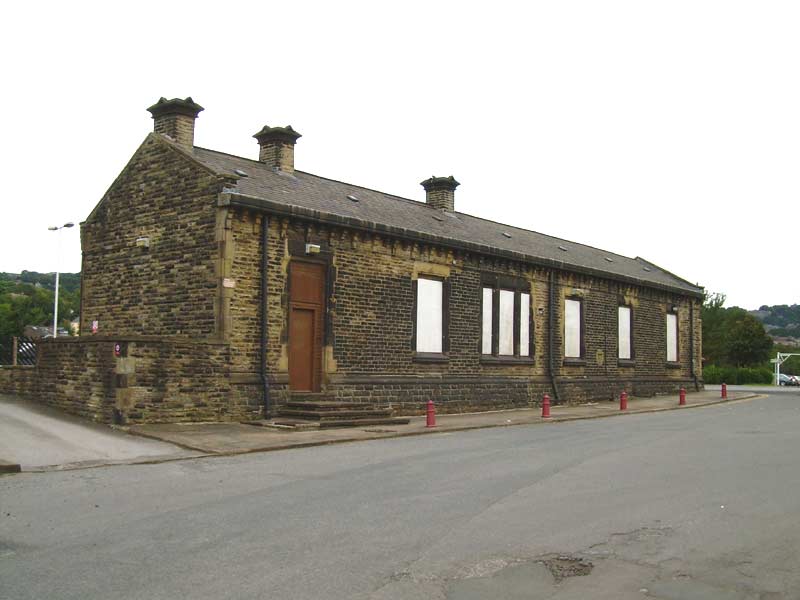
The Jubilee Refreshment Rooms, Sowerby Bridge, is in the old ticket office where Branwell Bronte, worked.

In 1840, Branwell was appointed assistant clerk at Sowerby Bridge’s recently opened railway station where he earned an annual wage of £75 working in a wooden and corrugated shack.


 Luddenden Foot

After a brief time at Sowerby Bridge, Branwell was promoted to clerk in charge of Luddenden Foot station where he earned £130 a year.

However, he found the position more taxing and when he was not idling away the hours sketching and doing freehand portraits of local characters, he often took himself off to the Lord Nelson, the village’s main inn.

When the Manchester and Leeds Railway came to check its accounts for the year ending 1841, it discovered a discrepancy of more than £11 - a sizeable sum in those days - and he was subsequently dismissed for neglect of duty.
 
Brothers Andrew and Chris Wright
 
Railway enthusiasts and life members of the Campaign for Real Ale, had a dream. They wanted to open an old-style railway refreshment room with a new twist – the pub was to serve commuters, but it was also to be a mecca for railway and real ale aficionados.


The place they found had been a Victorian station, built in 1876, at Sowerby Bridge. Most of it had been demolished, but there remained part of the structure, the old booking and parcels office. It took 12 years of negotiations, but finally a deal was done and financial help appeared, from the Railway Heritage Trust.

Train operators call for disused railway lines to reopenTwo years of hard work followed. Problems included dry rot, wet rot, asbestos and even a panic about anthrax. Excavation revealed treasures, too. There were no clues, however, about Branwell Bronte, the brother of the famous sisters, who was Clerk in Charge here in 1840, when the line opened.

The restoration is faithful to the 1876 design – the original paint scheme and sash windows.
So here it is, up and running since July. The pub opens a window – "the whistle-stop café" – from 7.30-9.30am for drinks and snacks, then offer bigger breakfasts indoors –"the fireman's shovel" – from 9.30am to noon. From midday to 11pm, the bar is open, offering at least six different real ales, all sourced from microbreweries within a 50-mile radius.
 
The Wrights want the Jubilee to become a convivial meeting place. Local breweriana collectors, plus local Camra branches, have already been. Earlier this month, the Sowerby Bridge Rushcart procession, with scores of Morris dancers, arrived and drank the place dry.  

donderdag 29 juli 2010

Travelling Companion


Travelling Companion
Augustus Leopold Egg
1862
Oil on canvas

the Worth Valley from the Keighley terminus.


The steep gradient up the Worth Valley from the Keighley terminus has been a challenge for locomotives ever since the line opened on 15th April 1867. The sound of a steam engine tackling this climb echoes from the steep sides of the valley, while great clouds of steam and smoke add drama to the scene. Many of the woollen mills that once stood close to the line have been demolished, but a few remain as reminders that the textile industry was the reason why the line was built. Like the railway, the mills relied on coal, and the trains were able to bring hundreds of tons up the valley each week to keep the looms working by steam power. The five mile journey is a powerful reminder of our industrial heritage, as well as being a unique way of enjoying the beautiful countryside immortalised by Charlotte, Emily and Anne Brontë.

The Brontes unfortunately did not enjoy the benefits of this branch line in their own time (it was not ready until 1867 and had been hampered by the floods of 1866), so they must have endured many trudges to Keighley to catch trains to transport manuscripts to publishers! In fact we know from Charlotte Bronte's letters in Elizabeth Gaskell's 'The Life of Charlotte Bronte' (see p.422) that Charlotte was often met by friends at Keighley Station to then make the long trudge back to Haworth - this must have been horrendous in the middle of winter!

De Brontes konden helaas nog niet genieten van de voordelen van deze treinlijn. De aanleg was pas klaar in 1867, de aanleg werd belemmerd door de overstromingen van 1866), dus zij hebben veel moeite moeten doen om op reis te gaan. We weten uit de brieven van Charlotte Bronte aan Elizabeth Gaskell ; "The Life of Charlotte Bronte "(zie p.422), dat Charlotte vaak werd gehaald op Station Keighley, om daarna de lange weg terug te sjokken naar Haworth - dit moet in de verschrikkelijke winters vreselijk zijn geweest!

woensdag 28 juli 2010

Per trein naar Haworth


How to Get to West Yorkshire

GNER (Great North Eastern Railway) runs train services from London’s Kings Cross station to Keighley many times a day with a change to the Northern Rail line. From there, a Keighley & District bus takes visitors on a scenic route right up to the top of Haworth, within a three minutes walk to Ashmount Guest House. The train services are easy to navigate and make renting a car unnecessary.

Another option from Keighley to Haworth is the popular Keighley and Worth Valley Railway. This steam engine service runs through gorgeous stations with its’ fleet of historic trains.

Another of Haworth's main attractions is the Keighley & Worth Valley Railway, a preserved steam railway which runs from Keighley station, via Haworth, to Oxenhope. The trains run every weekend, most days during the summer and also during school holidays, making it a fine olde-worlde way to arrive.

Haworth is no longer connected to the mainline rail network, and the only trains are those operated by the KWVR heritage railway. Their website has up-to-date details of train times. The nearest mainline station is Keighley on the Airedale Line, which has frequent connections to Leeds and Skipton. The modern station being adjacent to the heritage railway.
Arriving in Haworth by steam train, cross the footbridge and head uphill towards the upper part of the village. An alternative to walking up the cobbled street is to wander through the park area, which will bring you out on the main road. Cross at the pelican crossing, and proceed up the (very) steep cobbled road opposite, towards The Fleece pub.
Most of Haworth's bus services are provided by Keighley and District. Services 663, 664, 665 and 720 all serve Haworth, as does Firstbus service 500 which runs between Todmorden and Keighley (infrequent).
Service 665, also drops off on Rawdon Road, from where it is just a short walk up into the old village. This does away with the walk from the train station bus stop. On other routes, the best stop to get off at is Sun Street, opposite Weavers' Hill, as this also does away with the steep walk from the station area.

Visitors using Keighley & District's buses to travel to Keighley from further afield - eg from Leeds, Bradford, Skipton or Ilkley, and onward to Haworth, can take advantage of a "K-day" ticket which gives all day travel on all the company's bus services. This costs 2.50 for all-day travel (3.50 if purchased before 0930 Mon-Fri).

A further benefit for bus travellers interested in visiting East Riddlesden Hall, the KWVR, the Bront Parsonage Museum (Haworth) or the Museum of Rail Travel (Ingrow), should ask the driver for a "Heritage Voucher" which when presented with your valid Keighley & District ticket entitles you to discounted entry (special events excepted).

vrijdag 19 juni 2009

trein, railway

Introduction of steam

In 1812 the Middleton Steam Railway became the first commercial railway to successfully use steam locomotives. John Blenkinsop the colliery's viewer, or manager, had decided that an engine light enough not to break the cast iron track would not have sufficient adhesion, bearing in mind the heavy load of coal wagons and the steep track gradient. Accordingly he relaid the track on one side with a toothed rail, which he patented in 1811 (the first rack railway), and approached Matthew Murray of Fenton, Murray and Wood, in Holbeck, to design a locomotive with a pinion which would mesh with it. Murray's design was based on Richard Trevithick's Catch me who can, adapted to use Blenkinsop's rack and pinion system, and was called The Salamanca.
____________________________________

Haworth Village is just a short walk away from the Railway station. The area is rather hilly and the easiest pedestrian route to the Parsonage and Old Village is to go out of the station, over the railway footbridge and straight up the cobbled lane.
___________________________

Step back in time and enjoy a train ride through the heart of Brontë country. Most services are operated by steam trains, but the railway also serves the local community, with many people using the morning diesel railcar services to do their shopping in Keighley.
__________________________

The steep gradient up the Worth Valley from the Keighley terminus has been a challenge for locomotives ever since the line opened on 15th April 1867. The sound of a steam engine tackling this climb echoes from the steep sides of the valley, while great clouds of steam and smoke add drama to the scene. Many of the woollen mills that once stood close to the line have been demolished, but a few remain as reminders that the textile industry was the reason why the line was built. Like the railway, the mills relied on coal, and the trains were able to bring hundreds of tons up the valley each week to keep the looms working by steam power. The five mile journey is a powerful reminder of our industrial heritage, as well as being a unique way of enjoying the beautiful countryside immortalised by Charlotte, Emily and Anne Brontë.


This 1812 locomotive was the first to use two cylinders. These drove the pinions through cranks which were at right angles, so that the engine would start wherever it came to rest.

The line thus entered the history books, in 1812, for it was first to operate successfully, and with three more locos built later, remained in use for another twenty years. In 1881 the railway was converted to 4 ft 8+1⁄2 in (1,435 mm) standard gauge.

__________________________________
Keighley railway station serves the town of Keighley in West Yorkshire, England.

First opened in 1847 by the Leeds and Bradford Extension Railway (although rebuilt on the present site in 1875), the station is located on the Airedale Line 17 miles (27 km) north west of Leeds. It is managed by Northern Rail, who operate most of the passenger trains serving it. Electric trains operate frequently from Keighley towards Bradford Forster Square, Leeds and Skipton. Longer distance trains on the Leeds to Morecambe Line and Settle to Carlisle Line also call here.

Keighley is also the northern terminus of the Keighley and Worth Valley Railway. This is a heritage branch-line railway run by volunteers that was originally built by the Midland Railway and opened in 1867.


.

The Parlour

The Parlour

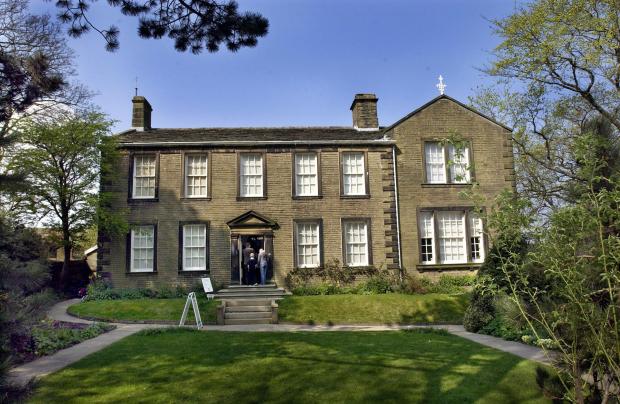
Parsonage

Parsonage

Charlotte Bronte

Presently the door opened, and in came a superannuated mastiff, followed by an old gentleman very like Miss Bronte, who shook hands with us, and then went to call his daughter. A long interval, during which we coaxed the old dog, and looked at a picture of Miss Bronte, by Richmond, the solitary ornament of the room, looking strangely out of place on the bare walls, and at the books on the little shelves, most of them evidently the gift of the authors since Miss Bronte's celebrity. Presently she came in, and welcomed us very kindly, and took me upstairs to take off my bonnet, and herself brought me water and towels. The uncarpeted stone stairs and floors, the old drawers propped on wood, were all scrupulously clean and neat. When we went into the parlour again, we began talking very comfortably, when the door opened and Mr. Bronte looked in; seeing his daughter there, I suppose he thought it was all right, and he retreated to his study on the opposite side of the passage; presently emerging again to bring W---- a country newspaper. This was his last appearance till we went. Miss Bronte spoke with the greatest warmth of Miss Martineau, and of the good she had gained from her. Well! we talked about various things; the character of the people, - about her solitude, etc., till she left the room to help about dinner, I suppose, for she did not return for an age. The old dog had vanished; a fat curly-haired dog honoured us with his company for some time, but finally manifested a wish to get out, so we were left alone. At last she returned, followed by the maid and dinner, which made us all more comfortable; and we had some very pleasant conversation, in the midst of which time passed quicker than we supposed, for at last W---- found that it was half-past three, and we had fourteen or fifteen miles before us. So we hurried off, having obtained from her a promise to pay us a visit in the spring... ------------------- "She cannot see well, and does little beside knitting. The way she weakened her eyesight was this: When she was sixteen or seventeen, she wanted much to draw; and she copied nimini-pimini copper-plate engravings out of annuals, ('stippling,' don't the artists call it?) every little point put in, till at the end of six months she had produced an exquisitely faithful copy of the engraving. She wanted to learn to express her ideas by drawing. After she had tried to draw stories, and not succeeded, she took the better mode of writing; but in so small a hand, that it is almost impossible to decipher what she wrote at this time.

I asked her whether she had ever taken opium, as the description given of its effects in Villette was so exactly like what I had experienced, - vivid and exaggerated presence of objects, of which the outlines were indistinct, or lost in golden mist, etc. She replied, that she had never, to her knowledge, taken a grain of it in any shape, but that she had followed the process she always adopted when she had to describe anything which had not fallen within her own experience; she had thought intently on it for many and many a night before falling to sleep, - wondering what it was like, or how it would be, - till at length, sometimes after the progress of her story had been arrested at this one point for weeks, she wakened up in the morning with all clear before her, as if she had in reality gone through the experience, and then could describe it, word for word, as it had happened. I cannot account for this psychologically; I only am sure that it was so, because she said it. ----------------------She thought much of her duty, and had loftier and clearer notions of it than most people, and held fast to them with more success. It was done, it seems to me, with much more difficulty than people have of stronger nerves, and better fortunes. All her life was but labour and pain; and she never threw down the burden for the sake of present pleasure. I don't know what use you can make of all I have said. I have written it with the strong desire to obtain appreciation for her. Yet, what does it matter? She herself appealed to the world's judgement for her use of some of the faculties she had, - not the best, - but still the only ones she could turn to strangers' benefit. They heartily, greedily enjoyed the fruits of her labours, and then found out she was much to be blamed for possessing such faculties. Why ask for a judgement on her from such a world?" elizabeth gaskell/charlotte bronte


Poem: No coward soul is mine

No coward soul is mine,
No trembler in the worlds storm-troubled sphere:
I see Heavens glories shine,
And faith shines equal, arming me from fear.


O God within my breast.
Almighty, ever-present Deity!
Life -- that in me has rest,
As I -- Undying Life -- have power in Thee!


Vain are the thousand creeds
That move mens hearts: unutterably vain;
Worthless as withered weeds,
Or idlest froth amid the boundless main,


To waken doubt in one
Holding so fast by Thine infinity;
So surely anchored on
The steadfast Rock of immortality.


With wide-embracing love
Thy Spirit animates eternal years,
Pervades and broods above,
Changes, sustains, dissolves, creates, and rears.


Though earth and man were gone,
And suns and universes ceased to be,
And Thou wert left alone,
Every existence would exist in Thee.


There is not room for Death,
Nor atom that his might could render void:
Thou -- Thou art Being and Breath,
And what Thou art may never be destroyed.


--
Emily Bronte

Family tree

The Bronte Family

Grandparents - paternal
Hugh Brunty was born 1755 and died circa 1808. He married Eleanor McClory, known as Alice in 1776.

Grandparents - maternal
Thomas Branwell (born 1746 died 5th April 1808) was married in 1768 to Anne Carne (baptised 27th April 1744 and died 19th December 1809).

Parents
Father was Patrick Bronte, the eldest of 10 children born to Hugh Brunty and Eleanor (Alice) McClory. He was born 17th March 1777 and died on 7th June 1861. Mother was Maria Branwell, who was born on 15th April 1783 and died on 15th September 1821.

Maria had a sister, Elizabeth who was known as Aunt Branwell. She was born in 1776 and died on 29th October 1842.

Patrick Bronte married Maria Branwell on 29th December 1812.

The Bronte Children
Patrick and Maria Bronte had six children.
The first child was Maria, who was born in 1814 and died on 6th June 1825.
The second daughter, Elizabeth was born on 8th February 1815 and died shortly after Maria on 15th June 1825. Charlotte was the third daughter, born on 21st April 1816.

Charlotte married Arthur Bell Nicholls (born 1818) on 29th June 1854. Charlotte died on 31st March 1855. Arthur lived until 2nd December 1906.

The first and only son born to Patrick and Maria was Patrick Branwell, who was born on 26th June 1817 and died on 24th September 1848.

Emily Jane, the fourth daughter was born on 30th July 1818 and died on 19th December 1848.

The sixth and last child was Anne, born on 17th January 1820 who died on 28th May 1849.

Top Withens in the snow.

Top Withens in the snow.

Blogarchief

LinkWithin

Related Posts with Thumbnails