This item was described as Lot 89 "Lace - work by the Bronte sisters", in the Sotheby & Wilkinson auction on 2nd of July 1898. It is now offered once again for sale 110 years later. This item comprises of two pieces of fine lace work in an oak frame. The frame measures 13" x 13". On the reverse there is a note written in pencil by the original 1898 purchaser " Lace worked by the Bronte sisters bought at a sale of Martha Brown's effects at Sotheby & Wilkinson London July 2, 1898 - 3 pounds, 3 shillings". There is a paper label on the top right hand corner with the number 89 written in pen. This is a Bronte relic with an impeccable provenance.
This is a blog about the Bronte Sisters, Charlotte, Emily and Anne. And their father Patrick, their mother Maria and their brother Branwell. About their pets, their friends, the parsonage (their house), Haworth the town in which they lived, the moors they loved so much, the Victorian era in which they lived.
I've dreamt in my life dreams that have stayed with me ever after, and changed my ideas: they've gone through and through me, like wine through water, and altered the color of my mind.
Emily BronteWuthering Heights
donderdag 12 augustus 2010
zondag 8 augustus 2010
Birthplace of Charlotte, (Patrick) Branwell, Emily Jane and Anne Bronte in Thornton.
This week I received an e-mail from Jar Bancroft, he is the maker of bancrofts from yorkshire.blog
Earlier I found his weblog and loved it very much. Interesting articles about the history of Yorkshire and the Bancroft family. In my weblog I posted allready an article I took over from Jar. Benjamin Babbage Report
He wrote to me that his great grandparents were living in the house in Thornton were Branwell, Charlotte, Emily and Anne Bronte were born.
The property has four bedrooms and three staircases! A stone above the front door suggests the house was built in 1802. When Patrick Bronte moved here as Curate to St James' Church, Thornton, in 1815, he was accompanied by his wife Maria and their two little girls. While Maria and Elizabeth were not to survive into adulthood the Bronte children born here grew up to take the literary world by storm.
Barbara Whitehead says on her website: "People sometimes wonder why the birthplaces of famous people are so important. Charlotte, Emily and Anne were small children here; it was not the place where they wrote their books. But the first years of life are very formative and this was a family home with their mother and their two elder sisters still living, the house where little Charlotte stood watching her mother playing with baby Branwell on the rug."
Angela takes us into what would have been the Parlour: "This is where they took tea with the Firth family from Kipping House and of course they went down to Kipping House quite a lot. In fact they had a lovely friendship with the Firth family." In the 1830s Patrick Bronte wrote a letter to one of the Firths. Angela says: "He came back in 1835 and he looked around Thornton and he looked at all the places that he loved and the old friends that he knew and in this letter he said, 'I've never quite been well since I left Thornton. My happiest days were spent there'. I think that says a lot."
The heart of the house would have been the dining room and it's also where the Bronte children were born. Continuing on through the back kitchen we reach an old stone staircase which goes up to the maids' room: "Sarah and Nancy Garrs came from the School of Industry in Bradford and Nancy was 13 when she had the job and she was their housemaid and I suppose you'd call it a children's nanny these days. They slept in here and this leads directly into what was the nursery."
Angela points out a bathroom which in the Bronte's day was a dressing room: "When Aunt Branwell came to stay she stayed in there because the house was quite full." Just along the passageway is what would have been the Reverend and Mrs Bronte's bedroom. "There was nothing opposite except a sweep of green fields going down and then climbing up to Clayton Heights so they'd get a lovely view of those lush green fields around Thornton which you still see through little walkways and ginnels."
If you want to read the complete article click here
Earlier I found his weblog and loved it very much. Interesting articles about the history of Yorkshire and the Bancroft family. In my weblog I posted allready an article I took over from Jar. Benjamin Babbage Report
He wrote to me that his great grandparents were living in the house in Thornton were Branwell, Charlotte, Emily and Anne Bronte were born.
Today I received an article from him, that tells more about the Bronte birthday house.
Thank you very much, Jar, for your kindness to mail to me. And I appreciate it so much that you, who are living so near to the place where this weblog is telling about, make the effort to write to me. If there are other people who can tell me stories about the Brontes, please, don' t hesitate.
It's very difficult to miss the plaque pointing out that this really is the birthplace of Charlotte, (Patrick) Branwell, Emily Jane and Anne Bronte. For a number of years the house has been owned by novelist Barbara Whitehead who has not only restored many of the house's original features but has been more than happy to open it to the public by arrangement. Now Barbara is retiring and has to sell the house. The Grade II listed building will be auctioned at Elland Road football stadium, the home of Leeds United, on Monday June 25th, 2007.
The property has four bedrooms and three staircases! A stone above the front door suggests the house was built in 1802. When Patrick Bronte moved here as Curate to St James' Church, Thornton, in 1815, he was accompanied by his wife Maria and their two little girls. While Maria and Elizabeth were not to survive into adulthood the Bronte children born here grew up to take the literary world by storm.Angela takes us into what would have been the Parlour: "This is where they took tea with the Firth family from Kipping House and of course they went down to Kipping House quite a lot. In fact they had a lovely friendship with the Firth family." In the 1830s Patrick Bronte wrote a letter to one of the Firths. Angela says: "He came back in 1835 and he looked around Thornton and he looked at all the places that he loved and the old friends that he knew and in this letter he said, 'I've never quite been well since I left Thornton. My happiest days were spent there'. I think that says a lot."
The heart of the house would have been the dining room and it's also where the Bronte children were born. Continuing on through the back kitchen we reach an old stone staircase which goes up to the maids' room: "Sarah and Nancy Garrs came from the School of Industry in Bradford and Nancy was 13 when she had the job and she was their housemaid and I suppose you'd call it a children's nanny these days. They slept in here and this leads directly into what was the nursery."If you want to read the complete article click here
woensdag 4 augustus 2010
Magherally Presbyterian Church and Drumballyroney
The sisters were born in West Yorkshire, England where you can still visit Brontë Country. However, their family originated in beautiful county Down in Northern Ireland, the Bronte Homeland. Their father Patrick Brontë had been a preacher and a teacher at the tiny village of Drumballyroney.
The school where Patrick taught still stands and has been restored and functions as a little museum.
zaterdag 31 juli 2010
Branwell and the station of Sowerby Bridge
Sowerby Bridge
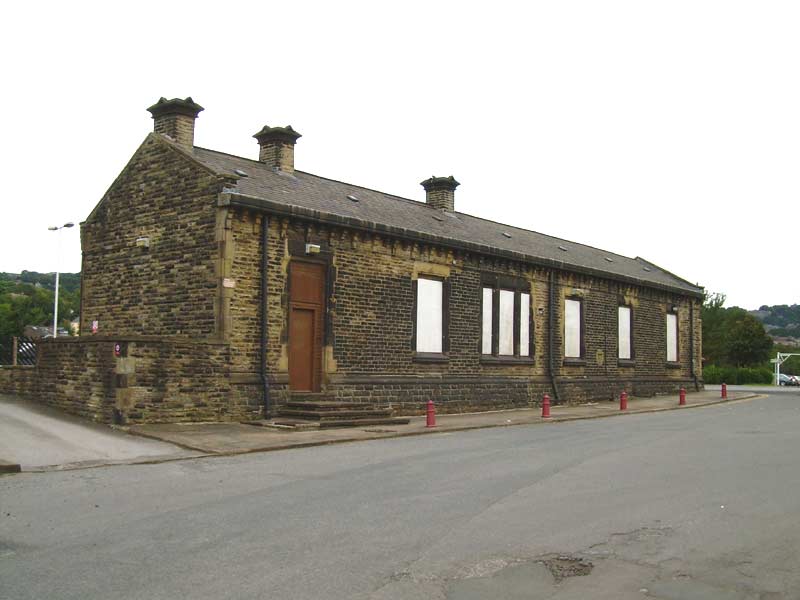
The Jubilee Refreshment Rooms, Sowerby Bridge, is in the old ticket office where Branwell Bronte, worked.
In 1840, Branwell was appointed assistant clerk at Sowerby Bridge’s recently opened railway station where he earned an annual wage of £75 working in a wooden and corrugated shack.
Luddenden Foot
After a brief time at Sowerby Bridge, Branwell was promoted to clerk in charge of Luddenden Foot station where he earned £130 a year.
However, he found the position more taxing and when he was not idling away the hours sketching and doing freehand portraits of local characters, he often took himself off to the Lord Nelson, the village’s main inn.
When the Manchester and Leeds Railway came to check its accounts for the year ending 1841, it discovered a discrepancy of more than £11 - a sizeable sum in those days - and he was subsequently dismissed for neglect of duty.
Brothers Andrew and Chris Wright
Railway enthusiasts and life members of the Campaign for Real Ale, had a dream. They wanted to open an old-style railway refreshment room with a new twist – the pub was to serve commuters, but it was also to be a mecca for railway and real ale aficionados.
The place they found had been a Victorian station, built in 1876, at Sowerby Bridge. Most of it had been demolished, but there remained part of the structure, the old booking and parcels office. It took 12 years of negotiations, but finally a deal was done and financial help appeared, from the Railway Heritage Trust.
Train operators call for disused railway lines to reopenTwo years of hard work followed. Problems included dry rot, wet rot, asbestos and even a panic about anthrax. Excavation revealed treasures, too. There were no clues, however, about Branwell Bronte, the brother of the famous sisters, who was Clerk in Charge here in 1840, when the line opened.
So here it is, up and running since July. The pub opens a window – "the whistle-stop café" – from 7.30-9.30am for drinks and snacks, then offer bigger breakfasts indoors –"the fireman's shovel" – from 9.30am to noon. From midday to 11pm, the bar is open, offering at least six different real ales, all sourced from microbreweries within a 50-mile radius.
The Wrights want the Jubilee to become a convivial meeting place. Local breweriana collectors, plus local Camra branches, have already been. Earlier this month, the Sowerby Bridge Rushcart procession, with scores of Morris dancers, arrived and drank the place dry.
vrijdag 30 juli 2010
Birthday Emily Bronte
is het
192 jaar geleden
dat Emily Bronte
werd geboren.
Emily Brontë was born at Thornton, Bradford, Yorkshire, and just after the birth of her sister Anne (20 April 1820), she moved with her family to Haworth, near Keighley, Yorkshire, where she spent most of her life. Today remembered chiefly as the author of the eighteenth-century romance Wuthering Heights (1847), set in her native Yorkshire.
donderdag 29 juli 2010
Haworth was (and is) the first Fairtrade Village in the world.
READ MOREhaworthfairtrade
READ MOREhaworthtrust
Several annual events are held in Haworth, many of which include dressing up. Among the most popular is the 1940s weekend, held in early May.
There's also carnival in August, a Halloween weekend, bonfire night fireworks, "Scroggling the Holly" in November where the Holly Queen is crowned and villagers dress up in Victorian costume, "Pipes, Bows and Bells" in early December which celebrates the region's industrial heritage, and also in December, the "Torchlit Weekend" where a torch-lit procession walks through the village and up to the church for the traditional Carol service.
READ MOREhaworthtrust
Several annual events are held in Haworth, many of which include dressing up. Among the most popular is the 1940s weekend, held in early May.
There's also carnival in August, a Halloween weekend, bonfire night fireworks, "Scroggling the Holly" in November where the Holly Queen is crowned and villagers dress up in Victorian costume, "Pipes, Bows and Bells" in early December which celebrates the region's industrial heritage, and also in December, the "Torchlit Weekend" where a torch-lit procession walks through the village and up to the church for the traditional Carol service.
the Worth Valley from the Keighley terminus.

The steep gradient up the Worth Valley from the Keighley terminus has been a challenge for locomotives ever since the line opened on 15th April 1867. The sound of a steam engine tackling this climb echoes from the steep sides of the valley, while great clouds of steam and smoke add drama to the scene. Many of the woollen mills that once stood close to the line have been demolished, but a few remain as reminders that the textile industry was the reason why the line was built. Like the railway, the mills relied on coal, and the trains were able to bring hundreds of tons up the valley each week to keep the looms working by steam power. The five mile journey is a powerful reminder of our industrial heritage, as well as being a unique way of enjoying the beautiful countryside immortalised by Charlotte, Emily and Anne Brontë.
The Brontes unfortunately did not enjoy the benefits of this branch line in their own time (it was not ready until 1867 and had been hampered by the floods of 1866), so they must have endured many trudges to Keighley to catch trains to transport manuscripts to publishers! In fact we know from Charlotte Bronte's letters in Elizabeth Gaskell's 'The Life of Charlotte Bronte' (see p.422) that Charlotte was often met by friends at Keighley Station to then make the long trudge back to Haworth - this must have been horrendous in the middle of winter!
De Brontes konden helaas nog niet genieten van de voordelen van deze treinlijn. De aanleg was pas klaar in 1867, de aanleg werd belemmerd door de overstromingen van 1866), dus zij hebben veel moeite moeten doen om op reis te gaan. We weten uit de brieven van Charlotte Bronte aan Elizabeth Gaskell ; "The Life of Charlotte Bronte "(zie p.422), dat Charlotte vaak werd gehaald op Station Keighley, om daarna de lange weg terug te sjokken naar Haworth - dit moet in de verschrikkelijke winters vreselijk zijn geweest!
A Yorkshire Classic: Celebrate the Railway Children in the gorgeous setting of the original tear-jerker
Daddy, my daddy!' shouted Bobbie, as the steam cleared and her long-lost father walked along the platform towards her. It was a cinematic moment like none other, requiring a year's supply of man-size tissues.
The film adaptation of Edith Nesbit's heartwarming book was made here during the hot summer of 1970.
You can visit all of the well-loved sights, from Bents House, the iconic family home known in the film as the Three Chimneys, to Oakworth Station, where the tearjerking scenes of the father's homecoming were filmed.
The tourist board is going full steam ahead next month, with Railway Children tours and the chance for children to ' be Mr Perks' on selected dates until September. Children - or grownups, for that matter - can take on Mr Perks's stationmaster role on the steam railway, operating the signals and greeting trains.
But you probably won't have to rip off your red petticoat to wave a warning at a train approaching a landslip.
Even if you are not a fan, a wander around the pretty village set in the Pennines deep in Bronte country and backed by wild moorland will be entertainment enough. The views make you gasp, as do the cakes in tea shops up and down the cobbled streets.
Stay in The Old Registry, with its nine individually themed rooms, and sample famous breakfasts, with sausages from local butcher Lishman's - one of Rick Stein's 'food heroes'. For Railway Children fans, Haworth won't disappoint.
Start at the visitor information centre in West Lane, which acted as the butcher's shop in the film.
From here follow the Railway Children Walk, a five-mile round trip. You can call in at the Royal Oak where William Mervyn - alias 'the Old Gentleman' - reportedly retreated one afternoon, still in costume, to enjoy a few ales with fellow cast members.
Nearby is the Bronte Parsonage Museum, named after Charlotte and Emily who lived here in the mid-1800s, and which doubled as Dr Forrest's surgery. The cosy Fleece Inn on Main Street with its stone-flagged bar is an idyllic stop-off. Stills from the making of the film line the walls.
The rooms above served as the location office and landlord Nick Hindle insists that Jenny Agutter (Bobbie) still visits every year to lead a charity walk. He proclaimed her as 'lovely, down-to-earth and fond of a pint of Landlord'.
It was here the famous landslide was filmed. A glass-fibre tree was slid up and down the embankment while the children battled to save the train from disaster.
Whether you want a pilgrimage to the Railway Children's spiritual home or simply to explore a charming English village, Haworth is just the ticket.
woensdag 28 juli 2010
Per trein naar Haworth
How to Get to West Yorkshire
GNER (Great North Eastern Railway) runs train services from London’s Kings Cross station to Keighley many times a day with a change to the Northern Rail line. From there, a Keighley & District bus takes visitors on a scenic route right up to the top of Haworth, within a three minutes walk to Ashmount Guest House. The train services are easy to navigate and make renting a car unnecessary.
Another option from Keighley to Haworth is the popular Keighley and Worth Valley Railway. This steam engine service runs through gorgeous stations with its’ fleet of historic trains.
Another of Haworth's main attractions is the Keighley & Worth Valley Railway, a preserved steam railway which runs from Keighley station, via Haworth, to Oxenhope. The trains run every weekend, most days during the summer and also during school holidays, making it a fine olde-worlde way to arrive.
Haworth is no longer connected to the mainline rail network, and the only trains are those operated by the KWVR heritage railway. Their website has up-to-date details of train times. The nearest mainline station is Keighley on the Airedale Line, which has frequent connections to Leeds and Skipton. The modern station being adjacent to the heritage railway.
Arriving in Haworth by steam train, cross the footbridge and head uphill towards the upper part of the village. An alternative to walking up the cobbled street is to wander through the park area, which will bring you out on the main road. Cross at the pelican crossing, and proceed up the (very) steep cobbled road opposite, towards The Fleece pub.
Most of Haworth's bus services are provided by Keighley and District. Services 663, 664, 665 and 720 all serve Haworth, as does Firstbus service 500 which runs between Todmorden and Keighley (infrequent).
Service 665, also drops off on Rawdon Road, from where it is just a short walk up into the old village. This does away with the walk from the train station bus stop. On other routes, the best stop to get off at is Sun Street, opposite Weavers' Hill, as this also does away with the steep walk from the station area.
Visitors using Keighley & District's buses to travel to Keighley from further afield - eg from Leeds, Bradford, Skipton or Ilkley, and onward to Haworth, can take advantage of a "K-day" ticket which gives all day travel on all the company's bus services. This costs 2.50 for all-day travel (3.50 if purchased before 0930 Mon-Fri).
A further benefit for bus travellers interested in visiting East Riddlesden Hall, the KWVR, the Bront Parsonage Museum (Haworth) or the Museum of Rail Travel (Ingrow), should ask the driver for a "Heritage Voucher" which when presented with your valid Keighley & District ticket entitles you to discounted entry (special events excepted).
YORK and Scarborough IN THE 19th CENTURY
In 1801, at the time of the first census, York had a population of 16,846. By the standards of the time it was quite a large town but it declined in importance as the century drew on. The industrial revolution meant other Yorkshire towns boomed but York failed to industrialise. In the early 19th century it remained a market town with many craftsmen but no factories.
However the railway reached York in 1839. In 1842 a repair workshop opened. Soon afterwards York became famous for making railway carriages, largely through the efforts of known as the railway king. In the late 19th century confectionery and making cocoa also became a major industry in York. So did flour milling. Also in the late 19th century an industry of making optical instruments flourished.
In the 19th century the population of York grew rapidly and houses spread across the fields outside the walls. Part of the rise in population was due to an influx of Irish immigrants who arrived in the 1840s fleeing the potato famine. Many of the new houses were overcrowded and like all 19th century towns York was dirty and unsanitary. In 1832 and 1849 York suffered outbreaks of cholera. There was also an epidemic of typhus (a disease spread by lice) in 1847, which killed 403 people. However there were some improvements in the city during this century.
From 1824 the streets of York were lit by gas. In 1825 an Act of Parliament formed a body of men called the Improvement Commissioners who were responsible for paving, lighting and cleaning the streets. They were replaced by a Board of Health in 1850. In York some people were rich enough to afford a flushing lavatory connected to a sewer but until the end of the century the raw sewage was flushed into rivers. Most of the people in York used 'earth closets', which were really buckets that were emptied at night into carts by the 'night soil' men. The 'night soil' was sold as fertiliser. In 1890-95 the council built a proper sewage disposal system but it wasn't until the 1920s that all houses in York were connected.
Meanwhile the first modern police force in York was formed in 1836 and after 1880 horse drawn trams ran in the streets of York. York Art Gallery opened in 1892. The first public library in York opened in 1893.
SCARBOROUGH IN THE 19th CENTURY
In the 19th century Scarborough continued to be a genteel seaside resort. The fishing industry continued and Scarborough continued to be a busy port. However shipbuilding declined.
The population rose rapidly. In 1801 Scarborough had a population of about 6,000. To us it would seem tiny but by the standards of the time it was a respectably sized town. It grew rapidly during the 19th century. By 1851 the population of Scarborough was around 13,000. By the end of the 19th century the population more than doubled to over 30,000.
The 19th century saw a number of improvements to Scarborough. In 1805 an Act of Parliament formed a body of men called the Improvement Commissioners with powers to pave, clean and light the streets of Scarborough (with oil lamps).
The Rotunda Museum opened in 1829. A waterworks company was formed in Scarborough in 1844. A Market Hall was built in 1853 and the first cemetery opened in 1857. Meanwhile Cliff Bridge opened in 1827. Valley Bridge opened in 1865.
The railway reached Scarborough in 1845 which, of course, made it easier for visitors to reach the town and a hospital opened in Scarborough in 1893.
However the railway reached York in 1839. In 1842 a repair workshop opened. Soon afterwards York became famous for making railway carriages, largely through the efforts of known as the railway king. In the late 19th century confectionery and making cocoa also became a major industry in York. So did flour milling. Also in the late 19th century an industry of making optical instruments flourished.
In the 19th century the population of York grew rapidly and houses spread across the fields outside the walls. Part of the rise in population was due to an influx of Irish immigrants who arrived in the 1840s fleeing the potato famine. Many of the new houses were overcrowded and like all 19th century towns York was dirty and unsanitary. In 1832 and 1849 York suffered outbreaks of cholera. There was also an epidemic of typhus (a disease spread by lice) in 1847, which killed 403 people. However there were some improvements in the city during this century.
From 1824 the streets of York were lit by gas. In 1825 an Act of Parliament formed a body of men called the Improvement Commissioners who were responsible for paving, lighting and cleaning the streets. They were replaced by a Board of Health in 1850. In York some people were rich enough to afford a flushing lavatory connected to a sewer but until the end of the century the raw sewage was flushed into rivers. Most of the people in York used 'earth closets', which were really buckets that were emptied at night into carts by the 'night soil' men. The 'night soil' was sold as fertiliser. In 1890-95 the council built a proper sewage disposal system but it wasn't until the 1920s that all houses in York were connected.
Meanwhile the first modern police force in York was formed in 1836 and after 1880 horse drawn trams ran in the streets of York. York Art Gallery opened in 1892. The first public library in York opened in 1893.
SCARBOROUGH IN THE 19th CENTURY
In the 19th century Scarborough continued to be a genteel seaside resort. The fishing industry continued and Scarborough continued to be a busy port. However shipbuilding declined.
The population rose rapidly. In 1801 Scarborough had a population of about 6,000. To us it would seem tiny but by the standards of the time it was a respectably sized town. It grew rapidly during the 19th century. By 1851 the population of Scarborough was around 13,000. By the end of the 19th century the population more than doubled to over 30,000.
The 19th century saw a number of improvements to Scarborough. In 1805 an Act of Parliament formed a body of men called the Improvement Commissioners with powers to pave, clean and light the streets of Scarborough (with oil lamps).
The Rotunda Museum opened in 1829. A waterworks company was formed in Scarborough in 1844. A Market Hall was built in 1853 and the first cemetery opened in 1857. Meanwhile Cliff Bridge opened in 1827. Valley Bridge opened in 1865.
The railway reached Scarborough in 1845 which, of course, made it easier for visitors to reach the town and a hospital opened in Scarborough in 1893.
vrijdag 23 juli 2010
Anne Bronte and Scarlborough
This picture, which dates from about the turn of the century, shows the view down 'Westborough', the road that was, in Anne's time, named 'Falsgrave Walk'. On the right is the Scarborough Railway Station, and the large imposing building in the picture-centre is the Pavilion Hotel. This was built in 1870 and survived for just over a hundred years - being demolished in 1973. Just to the left of this, in the distance, can be seen the castle. The rail-line from York to Scarborough was opened in 1845; and it was here, in the early afternoon7n of Friday, 25th May 1849, that Anne, Charlotte, and Ellen Nussey arrived on the fateful visit. From here, they made their way, by horse drawn carriage, to Wood's Lodgings, situated about a quarter of a mile beyond the large buildings on the right (behind the railway tower).
Anne's collection of pebbles which she gathered from Scarborough's South Sands. These are currently housed in the Brontë Parsonage Museum, and are often on show to visitors.
The old sketch shows St. Nicholas Cliff around 1840. Above are Wood's Lodgings, beyond and behind which is Scarborough's South Bay. It was in these buildings where Anne stayed during her first few years at Scarborough with the Robinson family. The smaller buildings (in the centre of the block) were demolished in 1842, and a larger structure erected in their place (see 'Wood's Lodgings (2)' - link below). The photograph shows the same view today with the Grand Hotel standing on the site of Wood's Lodgings
This drawing is titled 'New Buildings, Cliff, Scarborough', and dated 1843.59 It shows Wood's Lodgings viewed from the sea, with its new 'central block' and 'down-the-cliff' extension - in the year of Anne's third visit to the resort.60n On the left is the Spa Bridge, and a number of bathing huts are in evidence along the beach.
Reminiscences of Charlotte Bronte Ellen Nussey
Nussey was the twelfth child of John Nussey (1760–1826), a cloth merchant of Birstall Smithies, near Gomersal in the West Riding of Yorkshire, and his wife Ellen, née Wade (c.1771–1857). Nussey first attended a small local school before progressing to the Gomersal Moravian Ladies Academy. Nussey and Brontë first met in January 1831, when they were both pupils at Roe Head School, near Dewsbury in Yorkshire. They corresponded with each other regularly over the next 24 years, each writing hundreds of letters to the other. In 1839, Ellen Nussey's brother, Henry, proposed marriage to Brontë, but she found him dull and refused him
.
Through her frequent visits to the Parsonage at Haworth Nussey also became a friend of Anne and Emily Brontë, and was accepted as a suitable friend for his daughters by the Reverend Patrick Brontë. Indeed, when in May 1849, Anne decided to make a visit to Scarborough in the hope that the change of location and fresh sea air might be good for her failing health, and give her a chance to live, she went with Charlotte and Nussey. En route, the three spent a day and a night in York, where, escorting Anne around in a wheelchair, they did some shopping, and at Anne's request, visited the colossal York Minster. However, it was clear that Anne had little strength left.
On Sunday, 27 May 1849, Anne asked Charlotte whether it would be easier for her to come home to die instead of remaining at Scarborough. A doctor, consulted the next day, indicated that death was already close. Anne received the news quietly. She expressed her love and concern for Nussey and Charlotte, and seeing Charlotte's distress, whispered to her to "take courage. Nussey's presence during the weeks following gave comfort to Charlotte Brontë, who was writing her novel Shirley at the time. Nussey believed that the character Caroline Helstone was based on herself. but most writers dispute this, believing that Caroline was actually based on Anne Brontë.
When Charlotte Brontë married her father's Curate, the Rev. Arthur Bell Nichols, at Haworth in Yorkshire in June, 1854, Nussey was one of two witnesses present. Their engagement had caused a cooling in the friendship on Nussey's part, who was probably jealous of Brontë's attachment to Nicholls, having thought they would both live as spinsters. After her death, Brontë's husband, the Rev. Arthur Bell Nichols became concerned that her letters to Nussey might damage his late wife's reputation if they were misused, and he asked Nussey to destroy them, but she refused. Some scholars have claimed that this may have been to a struggle between Nicholls and Nussey over who had control over Charlotte Brontë's legacy [citation needed]. However, after over 350 letters from Charlotte Brontë to Nussey were used in Gaskell's The Life of Charlotte Brontë he prevented at least one other publication from using them.
After the death of Charlotte Brontë in 1855 Nussey devoted the rest of her life to maintaining the memory of her friend, and she was often sought out by Brontë enthusiasts and biographers.Ellen Nussey died in 1897, aged 80, at Moor Lane House in Gomersal in Yorkshire. Following her death, her possessions and letters were dispersed at auction, and many of Charlotte Brontë's letters to her eventually made their way through donation or purchase to the Brontë Parsonage Museum in Haworth in Yorkshire.
Nussey was the great-aunt of Helen Georgiana Nussey (1875–1965) the welfare worker.
read more
Title: The Cat Author: Emily Bronte
The Cat
I can say with sincerity that I like cats; also I can give very good reasons why those who despise them are wrong.
A cat is an animal who has more human feelings than almost any other being. We cannot sustain a comparison with the dog, it is infinitely too good; but the cat, although it differs in some physical points, is extremely like us in disposition.
There may be people, in truth, who would say that this resemblance extends only to the most wicked men; that it is limited to their excessive hypocrisy, cruelty, and ingratitude; detestable vices in our race and equally odious in that of cats.
Without disputing the limits that those individuals set on our affinity, I answer that if hypocrisy, cruelty, and ingratitude are exclusively the domain of the wicked, that class comprises everyone. Our education develops one of those qualities in great perfection; the others flourish without nurture, and far from condemning them, we regard all three with great complacency. A cat, in its own interest, sometimes hides its misanthropy under the guise of amiable gentleness; instead of tearing what it desires from its master's hand, it approaches with a caressing air, rubs its pretty little head against him, and advances a paw whose touch is soft as down. When it has gained its end, it reseumes its character of Timon; and that artfulness in it is called hypocrisy. In ourselves, we give it another name, politeness, and he who did not use it to hide his real feelings would soon be driven from society.
"But," says some delicate lady, who has murdered a half-dozen lapdogs through pure affection, "the cat is such a cruel beast, he is not content to kill his prey, he torments it before its death; you cannot make that accusation against us." More or less, Madame. Your husband, for example, likes hunting very much, but foxes being rare on his land, he would not have the means to pursue this amusement often, it he did not manage his supplies thus: once he has run an animal to its las breath, he snatches it from the jaws of the hounds and saves it to suffer the same infliction two or three more times, ending finally in death. You yourself avoid the bloody spectacle because it wounds your weak nerves. But I have seen you embrace your child in transports, when he came to show you a beautiful butterfly crushed between his cruel fingers; and at that moment, I really wanted to have a cat, with the tail of a half-devoured rat hanging from its mouth, to present as the image, the true copy, of your angel. You could not refuse to kiss him, and it he scratches us both in revenge, so much the better. Little boys are rather liable to acknowledge their friends' caresses in that way, and the resemblance would be more perfect. They know how to value our favours at their true price, because they guess the motives that prompt us to grant them, and if those motives might sometimes be good, undoubtedly they remember always that they owe all their misery and all their evil qualities to the great ancestor of humankind. For assuredly, the cat was not wicked in Paradise.
May 15th, 1842
verhalen van de Brontes/ click hierop
I can say with sincerity that I like cats; also I can give very good reasons why those who despise them are wrong.
A cat is an animal who has more human feelings than almost any other being. We cannot sustain a comparison with the dog, it is infinitely too good; but the cat, although it differs in some physical points, is extremely like us in disposition.
There may be people, in truth, who would say that this resemblance extends only to the most wicked men; that it is limited to their excessive hypocrisy, cruelty, and ingratitude; detestable vices in our race and equally odious in that of cats.
Without disputing the limits that those individuals set on our affinity, I answer that if hypocrisy, cruelty, and ingratitude are exclusively the domain of the wicked, that class comprises everyone. Our education develops one of those qualities in great perfection; the others flourish without nurture, and far from condemning them, we regard all three with great complacency. A cat, in its own interest, sometimes hides its misanthropy under the guise of amiable gentleness; instead of tearing what it desires from its master's hand, it approaches with a caressing air, rubs its pretty little head against him, and advances a paw whose touch is soft as down. When it has gained its end, it reseumes its character of Timon; and that artfulness in it is called hypocrisy. In ourselves, we give it another name, politeness, and he who did not use it to hide his real feelings would soon be driven from society.
"But," says some delicate lady, who has murdered a half-dozen lapdogs through pure affection, "the cat is such a cruel beast, he is not content to kill his prey, he torments it before its death; you cannot make that accusation against us." More or less, Madame. Your husband, for example, likes hunting very much, but foxes being rare on his land, he would not have the means to pursue this amusement often, it he did not manage his supplies thus: once he has run an animal to its las breath, he snatches it from the jaws of the hounds and saves it to suffer the same infliction two or three more times, ending finally in death. You yourself avoid the bloody spectacle because it wounds your weak nerves. But I have seen you embrace your child in transports, when he came to show you a beautiful butterfly crushed between his cruel fingers; and at that moment, I really wanted to have a cat, with the tail of a half-devoured rat hanging from its mouth, to present as the image, the true copy, of your angel. You could not refuse to kiss him, and it he scratches us both in revenge, so much the better. Little boys are rather liable to acknowledge their friends' caresses in that way, and the resemblance would be more perfect. They know how to value our favours at their true price, because they guess the motives that prompt us to grant them, and if those motives might sometimes be good, undoubtedly they remember always that they owe all their misery and all their evil qualities to the great ancestor of humankind. For assuredly, the cat was not wicked in Paradise.
May 15th, 1842
verhalen van de Brontes/ click hierop
Abonneren op:
Posts (Atom)
The Parlour
Parsonage
Charlotte Bronte
Presently the door opened, and in came a superannuated mastiff, followed by an old gentleman very like Miss Bronte, who shook hands with us, and then went to call his daughter. A long interval, during which we coaxed the old dog, and looked at a picture of Miss Bronte, by Richmond, the solitary ornament of the room, looking strangely out of place on the bare walls, and at the books on the little shelves, most of them evidently the gift of the authors since Miss Bronte's celebrity. Presently she came in, and welcomed us very kindly, and took me upstairs to take off my bonnet, and herself brought me water and towels. The uncarpeted stone stairs and floors, the old drawers propped on wood, were all scrupulously clean and neat. When we went into the parlour again, we began talking very comfortably, when the door opened and Mr. Bronte looked in; seeing his daughter there, I suppose he thought it was all right, and he retreated to his study on the opposite side of the passage; presently emerging again to bring W---- a country newspaper. This was his last appearance till we went. Miss Bronte spoke with the greatest warmth of Miss Martineau, and of the good she had gained from her. Well! we talked about various things; the character of the people, - about her solitude, etc., till she left the room to help about dinner, I suppose, for she did not return for an age. The old dog had vanished; a fat curly-haired dog honoured us with his company for some time, but finally manifested a wish to get out, so we were left alone. At last she returned, followed by the maid and dinner, which made us all more comfortable; and we had some very pleasant conversation, in the midst of which time passed quicker than we supposed, for at last W---- found that it was half-past three, and we had fourteen or fifteen miles before us. So we hurried off, having obtained from her a promise to pay us a visit in the spring... ------------------- "She cannot see well, and does little beside knitting. The way she weakened her eyesight was this: When she was sixteen or seventeen, she wanted much to draw; and she copied nimini-pimini copper-plate engravings out of annuals, ('stippling,' don't the artists call it?) every little point put in, till at the end of six months she had produced an exquisitely faithful copy of the engraving. She wanted to learn to express her ideas by drawing. After she had tried to draw stories, and not succeeded, she took the better mode of writing; but in so small a hand, that it is almost impossible to decipher what she wrote at this time.
I asked her whether she had ever taken opium, as the description given of its effects in Villette was so exactly like what I had experienced, - vivid and exaggerated presence of objects, of which the outlines were indistinct, or lost in golden mist, etc. She replied, that she had never, to her knowledge, taken a grain of it in any shape, but that she had followed the process she always adopted when she had to describe anything which had not fallen within her own experience; she had thought intently on it for many and many a night before falling to sleep, - wondering what it was like, or how it would be, - till at length, sometimes after the progress of her story had been arrested at this one point for weeks, she wakened up in the morning with all clear before her, as if she had in reality gone through the experience, and then could describe it, word for word, as it had happened. I cannot account for this psychologically; I only am sure that it was so, because she said it. ----------------------She thought much of her duty, and had loftier and clearer notions of it than most people, and held fast to them with more success. It was done, it seems to me, with much more difficulty than people have of stronger nerves, and better fortunes. All her life was but labour and pain; and she never threw down the burden for the sake of present pleasure. I don't know what use you can make of all I have said. I have written it with the strong desire to obtain appreciation for her. Yet, what does it matter? She herself appealed to the world's judgement for her use of some of the faculties she had, - not the best, - but still the only ones she could turn to strangers' benefit. They heartily, greedily enjoyed the fruits of her labours, and then found out she was much to be blamed for possessing such faculties. Why ask for a judgement on her from such a world?" elizabeth gaskell/charlotte bronte
Poem: No coward soul is mine
No coward soul is mine,
No trembler in the worlds storm-troubled sphere:
I see Heavens glories shine,
And faith shines equal, arming me from fear.
O God within my breast.
Almighty, ever-present Deity!
Life -- that in me has rest,
As I -- Undying Life -- have power in Thee!
Vain are the thousand creeds
That move mens hearts: unutterably vain;
Worthless as withered weeds,
Or idlest froth amid the boundless main,
To waken doubt in one
Holding so fast by Thine infinity;
So surely anchored on
The steadfast Rock of immortality.
With wide-embracing love
Thy Spirit animates eternal years,
Pervades and broods above,
Changes, sustains, dissolves, creates, and rears.
Though earth and man were gone,
And suns and universes ceased to be,
And Thou wert left alone,
Every existence would exist in Thee.
There is not room for Death,
Nor atom that his might could render void:
Thou -- Thou art Being and Breath,
And what Thou art may never be destroyed.
-- Emily Bronte
No trembler in the worlds storm-troubled sphere:
I see Heavens glories shine,
And faith shines equal, arming me from fear.
O God within my breast.
Almighty, ever-present Deity!
Life -- that in me has rest,
As I -- Undying Life -- have power in Thee!
Vain are the thousand creeds
That move mens hearts: unutterably vain;
Worthless as withered weeds,
Or idlest froth amid the boundless main,
To waken doubt in one
Holding so fast by Thine infinity;
So surely anchored on
The steadfast Rock of immortality.
With wide-embracing love
Thy Spirit animates eternal years,
Pervades and broods above,
Changes, sustains, dissolves, creates, and rears.
Though earth and man were gone,
And suns and universes ceased to be,
And Thou wert left alone,
Every existence would exist in Thee.
There is not room for Death,
Nor atom that his might could render void:
Thou -- Thou art Being and Breath,
And what Thou art may never be destroyed.
-- Emily Bronte
Family tree
The Bronte Family
Grandparents - paternal
Hugh Brunty was born 1755 and died circa 1808. He married Eleanor McClory, known as Alice in 1776.
Grandparents - maternal
Thomas Branwell (born 1746 died 5th April 1808) was married in 1768 to Anne Carne (baptised 27th April 1744 and died 19th December 1809).
Parents
Father was Patrick Bronte, the eldest of 10 children born to Hugh Brunty and Eleanor (Alice) McClory. He was born 17th March 1777 and died on 7th June 1861. Mother was Maria Branwell, who was born on 15th April 1783 and died on 15th September 1821.
Maria had a sister, Elizabeth who was known as Aunt Branwell. She was born in 1776 and died on 29th October 1842.
Patrick Bronte married Maria Branwell on 29th December 1812.
The Bronte Children
Patrick and Maria Bronte had six children.
The first child was Maria, who was born in 1814 and died on 6th June 1825.
The second daughter, Elizabeth was born on 8th February 1815 and died shortly after Maria on 15th June 1825. Charlotte was the third daughter, born on 21st April 1816.
Charlotte married Arthur Bell Nicholls (born 1818) on 29th June 1854. Charlotte died on 31st March 1855. Arthur lived until 2nd December 1906.
The first and only son born to Patrick and Maria was Patrick Branwell, who was born on 26th June 1817 and died on 24th September 1848.
Emily Jane, the fourth daughter was born on 30th July 1818 and died on 19th December 1848.
The sixth and last child was Anne, born on 17th January 1820 who died on 28th May 1849.
Grandparents - paternal
Hugh Brunty was born 1755 and died circa 1808. He married Eleanor McClory, known as Alice in 1776.
Grandparents - maternal
Thomas Branwell (born 1746 died 5th April 1808) was married in 1768 to Anne Carne (baptised 27th April 1744 and died 19th December 1809).
Parents
Father was Patrick Bronte, the eldest of 10 children born to Hugh Brunty and Eleanor (Alice) McClory. He was born 17th March 1777 and died on 7th June 1861. Mother was Maria Branwell, who was born on 15th April 1783 and died on 15th September 1821.
Maria had a sister, Elizabeth who was known as Aunt Branwell. She was born in 1776 and died on 29th October 1842.
Patrick Bronte married Maria Branwell on 29th December 1812.
The Bronte Children
Patrick and Maria Bronte had six children.
The first child was Maria, who was born in 1814 and died on 6th June 1825.
The second daughter, Elizabeth was born on 8th February 1815 and died shortly after Maria on 15th June 1825. Charlotte was the third daughter, born on 21st April 1816.
Charlotte married Arthur Bell Nicholls (born 1818) on 29th June 1854. Charlotte died on 31st March 1855. Arthur lived until 2nd December 1906.
The first and only son born to Patrick and Maria was Patrick Branwell, who was born on 26th June 1817 and died on 24th September 1848.
Emily Jane, the fourth daughter was born on 30th July 1818 and died on 19th December 1848.
The sixth and last child was Anne, born on 17th January 1820 who died on 28th May 1849.
Top Withens in the snow.
Blogarchief
-
▼
2024
(12)
- ► 11/17 - 11/24 (1)
- ► 03/17 - 03/24 (1)
- ► 02/18 - 02/25 (1)
- ► 01/21 - 01/28 (5)
- ► 01/14 - 01/21 (1)
- ► 01/07 - 01/14 (2)
-
►
2023
(9)
- ► 11/26 - 12/03 (1)
- ► 11/19 - 11/26 (1)
- ► 07/23 - 07/30 (1)
- ► 05/28 - 06/04 (1)
- ► 05/14 - 05/21 (1)
- ► 05/07 - 05/14 (1)
- ► 04/02 - 04/09 (1)
- ► 03/05 - 03/12 (1)
- ► 02/05 - 02/12 (1)
-
►
2022
(27)
- ► 12/25 - 01/01 (1)
- ► 12/04 - 12/11 (1)
- ► 11/20 - 11/27 (1)
- ► 11/13 - 11/20 (2)
- ► 10/30 - 11/06 (2)
- ► 10/23 - 10/30 (2)
- ► 10/09 - 10/16 (2)
- ► 07/17 - 07/24 (1)
- ► 06/12 - 06/19 (1)
- ► 06/05 - 06/12 (1)
- ► 05/22 - 05/29 (2)
- ► 02/27 - 03/06 (1)
- ► 02/20 - 02/27 (1)
- ► 02/13 - 02/20 (7)
- ► 01/16 - 01/23 (2)
-
►
2021
(47)
- ► 12/19 - 12/26 (1)
- ► 12/12 - 12/19 (1)
- ► 11/28 - 12/05 (1)
- ► 11/21 - 11/28 (2)
- ► 11/14 - 11/21 (1)
- ► 10/31 - 11/07 (2)
- ► 08/15 - 08/22 (1)
- ► 08/08 - 08/15 (1)
- ► 08/01 - 08/08 (1)
- ► 07/25 - 08/01 (1)
- ► 07/18 - 07/25 (1)
- ► 07/11 - 07/18 (1)
- ► 06/20 - 06/27 (3)
- ► 06/13 - 06/20 (2)
- ► 06/06 - 06/13 (3)
- ► 05/30 - 06/06 (7)
- ► 05/23 - 05/30 (8)
- ► 05/02 - 05/09 (2)
- ► 04/18 - 04/25 (4)
- ► 04/11 - 04/18 (1)
- ► 03/28 - 04/04 (2)
- ► 01/03 - 01/10 (1)
-
►
2020
(34)
- ► 12/20 - 12/27 (1)
- ► 12/06 - 12/13 (5)
- ► 11/08 - 11/15 (2)
- ► 11/01 - 11/08 (1)
- ► 10/11 - 10/18 (1)
- ► 10/04 - 10/11 (1)
- ► 09/06 - 09/13 (4)
- ► 08/16 - 08/23 (3)
- ► 08/02 - 08/09 (2)
- ► 07/12 - 07/19 (1)
- ► 07/05 - 07/12 (1)
- ► 06/28 - 07/05 (1)
- ► 04/19 - 04/26 (1)
- ► 03/22 - 03/29 (1)
- ► 02/09 - 02/16 (2)
- ► 01/26 - 02/02 (2)
- ► 01/12 - 01/19 (3)
- ► 01/05 - 01/12 (2)
-
►
2019
(34)
- ► 12/29 - 01/05 (2)
- ► 12/15 - 12/22 (1)
- ► 12/08 - 12/15 (1)
- ► 12/01 - 12/08 (3)
- ► 11/17 - 11/24 (2)
- ► 11/10 - 11/17 (2)
- ► 11/03 - 11/10 (1)
- ► 10/13 - 10/20 (2)
- ► 10/06 - 10/13 (1)
- ► 09/22 - 09/29 (1)
- ► 09/08 - 09/15 (1)
- ► 09/01 - 09/08 (3)
- ► 08/25 - 09/01 (2)
- ► 07/21 - 07/28 (1)
- ► 06/30 - 07/07 (2)
- ► 06/09 - 06/16 (1)
- ► 05/26 - 06/02 (1)
- ► 04/14 - 04/21 (1)
- ► 04/07 - 04/14 (1)
- ► 03/03 - 03/10 (1)
- ► 02/17 - 02/24 (2)
- ► 02/10 - 02/17 (1)
- ► 02/03 - 02/10 (1)
-
►
2018
(82)
- ► 12/30 - 01/06 (2)
- ► 12/23 - 12/30 (4)
- ► 12/16 - 12/23 (2)
- ► 11/25 - 12/02 (1)
- ► 11/18 - 11/25 (2)
- ► 11/11 - 11/18 (3)
- ► 11/04 - 11/11 (1)
- ► 10/28 - 11/04 (3)
- ► 10/21 - 10/28 (3)
- ► 10/07 - 10/14 (4)
- ► 09/23 - 09/30 (1)
- ► 08/26 - 09/02 (1)
- ► 08/19 - 08/26 (1)
- ► 08/05 - 08/12 (1)
- ► 07/29 - 08/05 (8)
- ► 07/22 - 07/29 (6)
- ► 06/24 - 07/01 (2)
- ► 06/17 - 06/24 (2)
- ► 06/10 - 06/17 (4)
- ► 06/03 - 06/10 (5)
- ► 05/27 - 06/03 (3)
- ► 05/20 - 05/27 (1)
- ► 05/13 - 05/20 (1)
- ► 05/06 - 05/13 (1)
- ► 04/29 - 05/06 (1)
- ► 04/22 - 04/29 (1)
- ► 04/15 - 04/22 (1)
- ► 04/08 - 04/15 (2)
- ► 04/01 - 04/08 (1)
- ► 03/25 - 04/01 (1)
- ► 03/18 - 03/25 (3)
- ► 03/11 - 03/18 (2)
- ► 03/04 - 03/11 (2)
- ► 02/11 - 02/18 (2)
- ► 01/14 - 01/21 (4)
-
►
2017
(69)
- ► 12/31 - 01/07 (2)
- ► 12/24 - 12/31 (1)
- ► 12/17 - 12/24 (1)
- ► 12/10 - 12/17 (2)
- ► 12/03 - 12/10 (4)
- ► 11/26 - 12/03 (1)
- ► 11/19 - 11/26 (5)
- ► 11/12 - 11/19 (2)
- ► 10/08 - 10/15 (2)
- ► 10/01 - 10/08 (2)
- ► 09/10 - 09/17 (2)
- ► 08/27 - 09/03 (2)
- ► 07/30 - 08/06 (1)
- ► 07/23 - 07/30 (1)
- ► 07/16 - 07/23 (3)
- ► 07/09 - 07/16 (1)
- ► 06/25 - 07/02 (3)
- ► 06/04 - 06/11 (1)
- ► 05/28 - 06/04 (1)
- ► 05/07 - 05/14 (2)
- ► 04/30 - 05/07 (2)
- ► 04/23 - 04/30 (1)
- ► 04/16 - 04/23 (2)
- ► 04/09 - 04/16 (2)
- ► 04/02 - 04/09 (3)
- ► 03/26 - 04/02 (1)
- ► 03/19 - 03/26 (1)
- ► 03/05 - 03/12 (4)
- ► 02/12 - 02/19 (1)
- ► 02/05 - 02/12 (4)
- ► 01/29 - 02/05 (1)
- ► 01/22 - 01/29 (2)
- ► 01/15 - 01/22 (2)
- ► 01/08 - 01/15 (2)
- ► 01/01 - 01/08 (2)
-
►
2016
(126)
- ► 12/25 - 01/01 (3)
- ► 12/18 - 12/25 (4)
- ► 12/04 - 12/11 (1)
- ► 11/27 - 12/04 (4)
- ► 11/20 - 11/27 (1)
- ► 11/13 - 11/20 (3)
- ► 11/06 - 11/13 (8)
- ► 10/30 - 11/06 (1)
- ► 10/23 - 10/30 (1)
- ► 10/16 - 10/23 (3)
- ► 10/09 - 10/16 (2)
- ► 10/02 - 10/09 (3)
- ► 09/11 - 09/18 (1)
- ► 08/28 - 09/04 (2)
- ► 08/21 - 08/28 (3)
- ► 08/07 - 08/14 (1)
- ► 07/31 - 08/07 (1)
- ► 07/24 - 07/31 (4)
- ► 07/17 - 07/24 (3)
- ► 07/03 - 07/10 (1)
- ► 06/26 - 07/03 (4)
- ► 06/19 - 06/26 (3)
- ► 06/12 - 06/19 (2)
- ► 06/05 - 06/12 (8)
- ► 05/29 - 06/05 (3)
- ► 05/22 - 05/29 (3)
- ► 05/08 - 05/15 (3)
- ► 05/01 - 05/08 (2)
- ► 04/24 - 05/01 (1)
- ► 04/17 - 04/24 (6)
- ► 04/10 - 04/17 (2)
- ► 04/03 - 04/10 (1)
- ► 03/27 - 04/03 (6)
- ► 03/20 - 03/27 (4)
- ► 03/13 - 03/20 (7)
- ► 03/06 - 03/13 (6)
- ► 02/28 - 03/06 (3)
- ► 02/21 - 02/28 (1)
- ► 02/14 - 02/21 (2)
- ► 02/07 - 02/14 (2)
- ► 01/31 - 02/07 (2)
- ► 01/17 - 01/24 (2)
- ► 01/10 - 01/17 (1)
- ► 01/03 - 01/10 (2)
-
►
2015
(192)
- ► 12/27 - 01/03 (4)
- ► 12/20 - 12/27 (4)
- ► 12/13 - 12/20 (6)
- ► 12/06 - 12/13 (3)
- ► 11/29 - 12/06 (1)
- ► 11/22 - 11/29 (4)
- ► 11/15 - 11/22 (4)
- ► 11/08 - 11/15 (8)
- ► 11/01 - 11/08 (2)
- ► 10/25 - 11/01 (4)
- ► 10/18 - 10/25 (2)
- ► 10/11 - 10/18 (2)
- ► 10/04 - 10/11 (2)
- ► 09/27 - 10/04 (4)
- ► 09/20 - 09/27 (3)
- ► 09/13 - 09/20 (2)
- ► 09/06 - 09/13 (2)
- ► 08/30 - 09/06 (3)
- ► 08/23 - 08/30 (1)
- ► 08/16 - 08/23 (4)
- ► 08/09 - 08/16 (2)
- ► 08/02 - 08/09 (4)
- ► 07/26 - 08/02 (5)
- ► 07/19 - 07/26 (2)
- ► 07/12 - 07/19 (3)
- ► 07/05 - 07/12 (1)
- ► 06/21 - 06/28 (1)
- ► 06/14 - 06/21 (10)
- ► 06/07 - 06/14 (2)
- ► 05/31 - 06/07 (6)
- ► 05/24 - 05/31 (4)
- ► 05/17 - 05/24 (2)
- ► 05/10 - 05/17 (2)
- ► 05/03 - 05/10 (4)
- ► 04/26 - 05/03 (5)
- ► 04/19 - 04/26 (7)
- ► 04/12 - 04/19 (3)
- ► 04/05 - 04/12 (3)
- ► 03/29 - 04/05 (4)
- ► 03/22 - 03/29 (4)
- ► 03/15 - 03/22 (1)
- ► 03/08 - 03/15 (8)
- ► 03/01 - 03/08 (6)
- ► 02/22 - 03/01 (6)
- ► 02/15 - 02/22 (1)
- ► 02/08 - 02/15 (3)
- ► 02/01 - 02/08 (3)
- ► 01/25 - 02/01 (8)
- ► 01/18 - 01/25 (7)
- ► 01/11 - 01/18 (7)
- ► 01/04 - 01/11 (3)
-
►
2014
(270)
- ► 12/28 - 01/04 (5)
- ► 12/21 - 12/28 (6)
- ► 12/14 - 12/21 (9)
- ► 12/07 - 12/14 (11)
- ► 11/30 - 12/07 (4)
- ► 11/23 - 11/30 (9)
- ► 11/16 - 11/23 (10)
- ► 11/09 - 11/16 (5)
- ► 11/02 - 11/09 (3)
- ► 10/26 - 11/02 (3)
- ► 10/19 - 10/26 (4)
- ► 10/12 - 10/19 (6)
- ► 10/05 - 10/12 (6)
- ► 09/28 - 10/05 (4)
- ► 09/21 - 09/28 (5)
- ► 09/07 - 09/14 (3)
- ► 08/31 - 09/07 (8)
- ► 08/24 - 08/31 (3)
- ► 08/17 - 08/24 (3)
- ► 08/10 - 08/17 (6)
- ► 08/03 - 08/10 (4)
- ► 07/27 - 08/03 (1)
- ► 07/20 - 07/27 (2)
- ► 07/13 - 07/20 (1)
- ► 07/06 - 07/13 (8)
- ► 06/29 - 07/06 (4)
- ► 06/22 - 06/29 (6)
- ► 06/15 - 06/22 (2)
- ► 06/08 - 06/15 (4)
- ► 06/01 - 06/08 (7)
- ► 05/25 - 06/01 (5)
- ► 05/18 - 05/25 (6)
- ► 05/11 - 05/18 (7)
- ► 05/04 - 05/11 (7)
- ► 04/27 - 05/04 (9)
- ► 04/20 - 04/27 (3)
- ► 04/13 - 04/20 (4)
- ► 04/06 - 04/13 (7)
- ► 03/30 - 04/06 (2)
- ► 03/23 - 03/30 (8)
- ► 03/16 - 03/23 (6)
- ► 03/09 - 03/16 (8)
- ► 03/02 - 03/09 (4)
- ► 02/23 - 03/02 (5)
- ► 02/16 - 02/23 (4)
- ► 02/09 - 02/16 (3)
- ► 02/02 - 02/09 (8)
- ► 01/26 - 02/02 (11)
- ► 01/19 - 01/26 (2)
- ► 01/12 - 01/19 (6)
- ► 01/05 - 01/12 (3)
-
►
2013
(278)
- ► 12/29 - 01/05 (7)
- ► 12/22 - 12/29 (2)
- ► 12/15 - 12/22 (9)
- ► 12/08 - 12/15 (10)
- ► 12/01 - 12/08 (3)
- ► 11/24 - 12/01 (10)
- ► 11/17 - 11/24 (7)
- ► 11/10 - 11/17 (3)
- ► 11/03 - 11/10 (5)
- ► 10/27 - 11/03 (5)
- ► 10/20 - 10/27 (3)
- ► 10/13 - 10/20 (6)
- ► 10/06 - 10/13 (6)
- ► 09/29 - 10/06 (5)
- ► 09/22 - 09/29 (6)
- ► 09/15 - 09/22 (1)
- ► 09/08 - 09/15 (4)
- ► 09/01 - 09/08 (7)
- ► 08/25 - 09/01 (9)
- ► 08/18 - 08/25 (4)
- ► 08/11 - 08/18 (6)
- ► 08/04 - 08/11 (3)
- ► 07/28 - 08/04 (8)
- ► 07/21 - 07/28 (5)
- ► 07/14 - 07/21 (3)
- ► 07/07 - 07/14 (8)
- ► 06/30 - 07/07 (8)
- ► 06/23 - 06/30 (2)
- ► 06/16 - 06/23 (7)
- ► 06/09 - 06/16 (6)
- ► 06/02 - 06/09 (3)
- ► 05/26 - 06/02 (5)
- ► 05/19 - 05/26 (3)
- ► 05/12 - 05/19 (5)
- ► 05/05 - 05/12 (4)
- ► 04/28 - 05/05 (6)
- ► 04/21 - 04/28 (5)
- ► 04/14 - 04/21 (7)
- ► 04/07 - 04/14 (7)
- ► 03/31 - 04/07 (3)
- ► 03/17 - 03/24 (1)
- ► 03/10 - 03/17 (7)
- ► 03/03 - 03/10 (5)
- ► 02/24 - 03/03 (5)
- ► 02/17 - 02/24 (6)
- ► 02/10 - 02/17 (11)
- ► 02/03 - 02/10 (12)
- ► 01/27 - 02/03 (4)
- ► 01/20 - 01/27 (5)
- ► 01/13 - 01/20 (3)
- ► 01/06 - 01/13 (3)
-
►
2012
(303)
- ► 12/30 - 01/06 (2)
- ► 12/23 - 12/30 (3)
- ► 12/16 - 12/23 (6)
- ► 12/09 - 12/16 (2)
- ► 12/02 - 12/09 (17)
- ► 11/25 - 12/02 (2)
- ► 11/18 - 11/25 (3)
- ► 11/11 - 11/18 (9)
- ► 11/04 - 11/11 (5)
- ► 10/28 - 11/04 (6)
- ► 10/21 - 10/28 (9)
- ► 10/14 - 10/21 (7)
- ► 10/07 - 10/14 (9)
- ► 09/30 - 10/07 (6)
- ► 09/23 - 09/30 (6)
- ► 09/16 - 09/23 (8)
- ► 09/09 - 09/16 (4)
- ► 09/02 - 09/09 (7)
- ► 08/26 - 09/02 (2)
- ► 08/19 - 08/26 (3)
- ► 08/05 - 08/12 (2)
- ► 07/29 - 08/05 (5)
- ► 07/22 - 07/29 (3)
- ► 07/15 - 07/22 (7)
- ► 07/08 - 07/15 (6)
- ► 07/01 - 07/08 (3)
- ► 06/24 - 07/01 (6)
- ► 06/17 - 06/24 (7)
- ► 06/10 - 06/17 (5)
- ► 06/03 - 06/10 (4)
- ► 05/27 - 06/03 (6)
- ► 05/20 - 05/27 (3)
- ► 05/13 - 05/20 (3)
- ► 05/06 - 05/13 (3)
- ► 04/29 - 05/06 (3)
- ► 04/22 - 04/29 (4)
- ► 04/15 - 04/22 (4)
- ► 04/08 - 04/15 (9)
- ► 04/01 - 04/08 (9)
- ► 03/25 - 04/01 (4)
- ► 03/18 - 03/25 (7)
- ► 03/11 - 03/18 (4)
- ► 03/04 - 03/11 (5)
- ► 02/26 - 03/04 (7)
- ► 02/19 - 02/26 (7)
- ► 02/12 - 02/19 (3)
- ► 02/05 - 02/12 (7)
- ► 01/29 - 02/05 (12)
- ► 01/22 - 01/29 (8)
- ► 01/15 - 01/22 (13)
- ► 01/08 - 01/15 (8)
- ► 01/01 - 01/08 (10)
-
►
2011
(446)
- ► 12/25 - 01/01 (12)
- ► 12/18 - 12/25 (12)
- ► 12/11 - 12/18 (14)
- ► 12/04 - 12/11 (11)
- ► 11/27 - 12/04 (13)
- ► 11/20 - 11/27 (17)
- ► 11/13 - 11/20 (19)
- ► 11/06 - 11/13 (12)
- ► 10/30 - 11/06 (10)
- ► 10/23 - 10/30 (22)
- ► 10/16 - 10/23 (5)
- ► 10/09 - 10/16 (7)
- ► 10/02 - 10/09 (8)
- ► 09/25 - 10/02 (7)
- ► 09/18 - 09/25 (9)
- ► 09/11 - 09/18 (5)
- ► 09/04 - 09/11 (4)
- ► 08/28 - 09/04 (7)
- ► 08/21 - 08/28 (8)
- ► 08/14 - 08/21 (8)
- ► 08/07 - 08/14 (8)
- ► 07/31 - 08/07 (11)
- ► 07/24 - 07/31 (7)
- ► 07/17 - 07/24 (8)
- ► 07/10 - 07/17 (9)
- ► 07/03 - 07/10 (12)
- ► 06/26 - 07/03 (9)
- ► 06/19 - 06/26 (14)
- ► 06/12 - 06/19 (11)
- ► 06/05 - 06/12 (10)
- ► 05/29 - 06/05 (10)
- ► 05/22 - 05/29 (10)
- ► 05/15 - 05/22 (11)
- ► 05/08 - 05/15 (3)
- ► 05/01 - 05/08 (8)
- ► 04/24 - 05/01 (4)
- ► 04/17 - 04/24 (5)
- ► 04/10 - 04/17 (5)
- ► 04/03 - 04/10 (9)
- ► 03/27 - 04/03 (2)
- ► 03/20 - 03/27 (3)
- ► 03/13 - 03/20 (4)
- ► 03/06 - 03/13 (11)
- ► 02/27 - 03/06 (7)
- ► 02/20 - 02/27 (10)
- ► 02/13 - 02/20 (6)
- ► 01/30 - 02/06 (1)
- ► 01/23 - 01/30 (8)
- ► 01/16 - 01/23 (4)
- ► 01/09 - 01/16 (3)
- ► 01/02 - 01/09 (13)
-
►
2010
(196)
- ► 12/26 - 01/02 (6)
- ► 12/19 - 12/26 (7)
- ► 12/12 - 12/19 (7)
- ► 12/05 - 12/12 (14)
- ► 11/28 - 12/05 (3)
- ► 11/21 - 11/28 (6)
- ► 11/14 - 11/21 (8)
- ► 11/07 - 11/14 (3)
- ► 10/31 - 11/07 (4)
- ► 10/17 - 10/24 (2)
- ► 10/10 - 10/17 (3)
- ► 10/03 - 10/10 (3)
- ► 09/26 - 10/03 (1)
- ► 09/19 - 09/26 (4)
- ► 09/12 - 09/19 (2)
- ► 09/05 - 09/12 (8)
- ► 08/29 - 09/05 (2)
- ► 08/22 - 08/29 (4)
- ► 08/15 - 08/22 (8)
- ► 08/08 - 08/15 (2)
- ► 08/01 - 08/08 (1)
- ► 07/25 - 08/01 (8)
- ► 07/18 - 07/25 (5)
- ► 07/11 - 07/18 (10)
- ► 07/04 - 07/11 (4)
- ► 06/27 - 07/04 (7)
- ► 06/20 - 06/27 (4)
- ► 06/13 - 06/20 (3)
- ► 05/30 - 06/06 (1)
- ► 05/23 - 05/30 (5)
- ► 05/16 - 05/23 (3)
- ► 05/09 - 05/16 (6)
- ► 05/02 - 05/09 (7)
- ► 04/25 - 05/02 (2)
- ► 04/18 - 04/25 (4)
- ► 04/11 - 04/18 (3)
- ► 04/04 - 04/11 (1)
- ► 03/28 - 04/04 (2)
- ► 03/14 - 03/21 (2)
- ► 02/28 - 03/07 (1)
- ► 02/21 - 02/28 (2)
- ► 02/14 - 02/21 (12)
- ► 02/07 - 02/14 (1)
- ► 01/31 - 02/07 (4)
- ► 01/17 - 01/24 (1)
-
►
2009
(98)
- ► 12/20 - 12/27 (1)
- ► 12/13 - 12/20 (2)
- ► 12/06 - 12/13 (1)
- ► 11/22 - 11/29 (3)
- ► 11/15 - 11/22 (1)
- ► 11/08 - 11/15 (1)
- ► 11/01 - 11/08 (1)
- ► 10/25 - 11/01 (7)
- ► 10/18 - 10/25 (1)
- ► 10/04 - 10/11 (1)
- ► 09/27 - 10/04 (2)
- ► 09/20 - 09/27 (1)
- ► 09/13 - 09/20 (4)
- ► 09/06 - 09/13 (3)
- ► 08/30 - 09/06 (3)
- ► 08/23 - 08/30 (1)
- ► 08/09 - 08/16 (2)
- ► 08/02 - 08/09 (1)
- ► 07/26 - 08/02 (1)
- ► 06/28 - 07/05 (6)
- ► 06/21 - 06/28 (12)
- ► 06/14 - 06/21 (43)